
The Collector’s Shelf
Warhammer 40,000
Discover Warhammer 40,000 as a fictional universe: rival factions, visual storytelling and collections spanning miniatures and character figures.

Pre-order: Warhammer 40,000
All pre-orders → Pre-order
Warhammer 40,000 Striking Scorpion Miniature Helmet Statue
Weta Workshop
 Pre-order
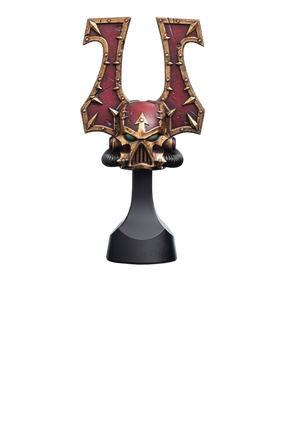
Warhammer 40,000 Khorne Berzerker Miniature Helmet Statue
Weta Workshop
 Pre-order
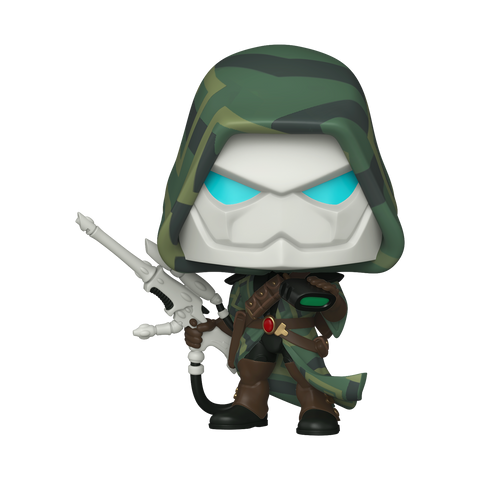
Total War: WARHAMMER 40,000 Aeldari Ranger Funko Pop! Vinyl Figure #1291
Funko
 Pre-order
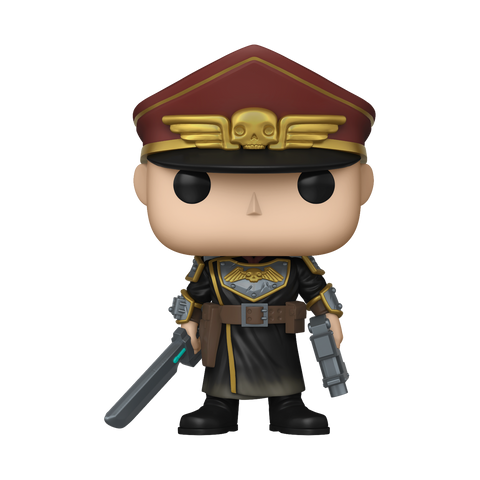
Total War: WARHAMMER 40,000 Astra Militarum Commissar Funko Pop! Vinyl Figure #1289
Funko
 Pre-order
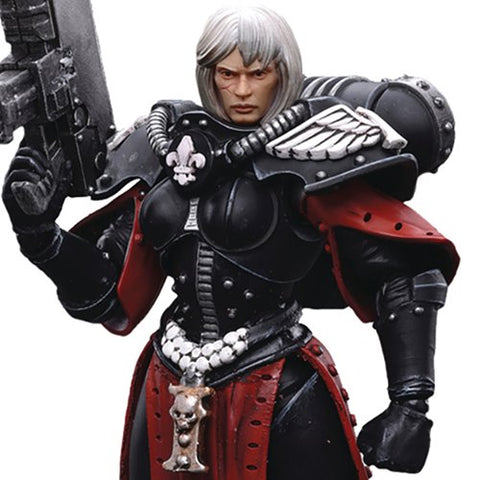
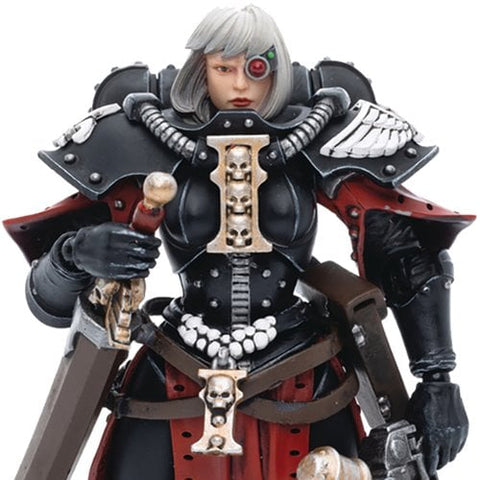
Joy Toy Warhammer 40,000 Adepta Sororitas Battle Sister Noyalle 1:18 Scale Action Figure
JoyToy
 Pre-order
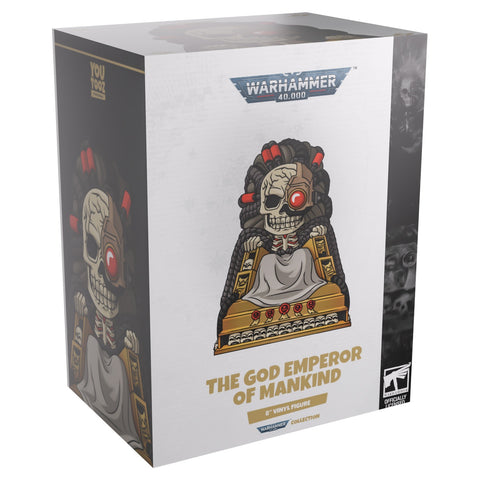
Joy Toy Warhammer 40,000 Adepta Sororitas Battle Sister Superior Kassia 1:18 Scale Action Figure
JoyToy
Discover Warhammer 40,000 as a fictional universe: rival factions, visual storytelling and collections spanning miniatures and character figures.
A collection can be a window into the far future
Warhammer 40,000 is a setting that can be explored through objects as well as games. The official army guide organizes its forces around Space Marines, other armies of the Imperium, Chaos and alien factions. Within that broad structure are very different ways of imagining power, survival and conflict. A theme-focused collection can investigate those differences without committing to the practical requirements of a complete playable army.
Begin with the impression you want a viewer to take away. Perhaps it is the contrast between an individual soldier and an enormous institution, or between a carefully ordered force and an unfamiliar enemy. Select a small number of pieces that make that idea legible. A display does not become more informative simply by containing more factions. Giving each object enough space and a clear relationship to its neighbors can communicate the setting more effectively than a crowded survey.
Rogue Trader established a world open to interpretation
Games Workshop's retrospective identifies 1987's Rogue Trader as the first view of the 41st Millennium. Its earliest presentation accommodated small skirmishes in varied environments, from alien worlds to spacecraft. That origin is useful context for a narrative collector: the setting was a framework for imagining encounters, not only a catalog of standardized armies. Historical books and later objects can reveal different ways that framework has been presented.
When comparing eras, look at what the artwork asks you to notice. Is the emphasis on a solitary figure, a crowded battlefield or the scale of a machine? Record the publication or product associated with each reference rather than treating every image as a description of one moment in fictional history. A chronological display can show artistic development, but it needs accurate labels. Keep the date an object was published separate from the period its story depicts.
Different threats create different visual stories
The official faction descriptions portray Aeldari as a people living after the fragmentation of a galactic empire, with craftworld communities fighting for survival. Necrons are presented as ancient android legions emerging from long dormancy, while Tyranids are an extragalactic biological threat driven by a Hive Mind. These are distinct narrative premises, not interchangeable versions of a generic space monster. The choice of opponent changes the kind of scene you are building.
For your own display, try describing the imagined encounter without naming any faction. If the description could apply to every possible combination, give it a more specific visual question. A scene of awakening may need empty space and signs of discovery; a scene of pursuit may need a clear direction of movement. These suggestions are personal storytelling methods rather than official lore. They help connect the physical arrangement to the reason a particular faction interests you.
The theme reaches beyond tabletop kits
Mystery Collective's Warhammer 40,000 theme includes Funko's Pop! Aeldari Ranger, Pop! Ork Nob and Pop! Astra Militarum Commissar. Those character figures sit alongside tabletop entries such as Battlefields: Armageddon and Codex: Orks (Collector’s Edition). A shared theme connects the fictional references, but it does not make the products interchangeable. A stylized figure, a book and a terrain-related listing invite different kinds of attention.
This breadth can support a focused cross-format display. You could pair a character interpretation with a relevant illustrated publication, or compare how different makers simplify equipment and proportions. Check the exact product before assigning it a role: a catalog title alone does not establish scale, included components or playable status. Avoid treating a larger stylized figure as a substitute for a game miniature. Its value to the display can lie in how it reinterprets a recognizable subject.
Make the viewpoint of a scene explicit
A useful display caption answers who is present, what is happening and whose perspective the viewer is seeing. You do not need to summarize the entire galaxy. A short, clearly labeled personal scenario can explain why two models face one another or why a particular object has been placed in the foreground. If you use official story names, verify them against a relevant publication instead of inferring an event from a dramatic product image.
Give invented units, places and incidents their own labels. That protects the distinction between established fiction and your contribution to it, especially when sharing photographs with other collectors. It also makes later revisions easier: changing your scene need not imply correcting the official setting. For a display based on a published encounter, keep a note of the source and the details you deliberately changed. Interpretation is more interesting when its choices are visible rather than accidentally presented as fact.
Build a reading route around the collection
Choose the next piece of reading by the question your collection raises. A faction overview can orient you, while a specific story may clarify a character's motivation or the atmosphere of a location. Separate spoiler-free discovery from detailed narrative research if you intend to read the fiction for pleasure. A collector interested in visual design may prefer to study illustrations first, then return to the text once the project has a direction.
Relevant guides, updates and Radar entries can help identify an interpretation or newly announced object, but a release notice is not a complete lore reference. Follow the distinction between a product's commercial title and the fictional identity it depicts. Photograph the display as a whole as well as individual pieces, then assess whether the intended story remains clear. If it does not, simplify the arrangement before adding another item. A convincing view of this universe can begin with one well-chosen encounter.
FAQs
Does the Warhammer 40,000 theme include only playable miniatures?
No. This catalog also groups character figures and publications by their fictional theme. Confirm the product type rather than assuming every entry has a tabletop role.
How should I label a scene I invented?
Call it a personal scenario or interpretation. Identify any official characters or sources separately, so viewers can distinguish established fiction from your own additions.
Sources
Pre-orders
Pre-orders are open
Reserve upcoming releases before they land. Full refund any time before it ships.