
The Collector’s Shelf
VeeFriends
Explore VeeFriends as a character-and-values universe, with a theme-focused view of the 2026 Chrome cast and ways to read character names and illustrations.

 Cards
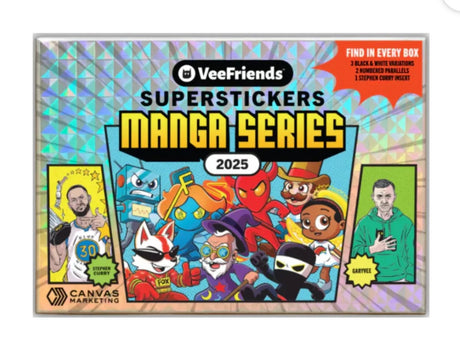
VeeFriends 2025 VeeFriends Super Sticker Manga Series — Stephen Curry
VeeFriends
$142.99In stock Graded Medal
2025 VeeFriends Peaceful Pelican Copper Medal NGC GEM PROOF Rookie Coin
Collectible Coin
$50.99In stock Coin Pack
2026 VeeFriends Collectible Coins Pack Presale
VeeFriends
$69.99In stock Graded Gilt Coin
VeeFriends Treasure Chest Moral Monkey Gold-Plated Gilt Coin /200 NGC GEM PROOF
VeeFriends
$149.99In stock Graded Brass Medal
VeeFriends Swaggy Sea Lion Brass Medal NGC GEM PROOF
VeeFriends
$89.99In stock Graded Coin
VeeFriends Proactive Piranha Gold-Plated Gilt Coin NGC GEM PROOF
VeeFriends
$159.99In stockExplore VeeFriends as a character-and-values universe, with a theme-focused view of the 2026 Chrome cast and ways to read character names and illustrations.
Character names make abstract qualities easier to discuss
VeeFriends describes its universe as more than 250 characters created around values that connect people, including empathy, patience and kindness. Its official introduction places those characters across collectibles, comics and cartoons. That gives the theme a clear subject beyond a particular box format: personified qualities expressed through names, designs and stories.
A theme-focused collection can begin with a quality you find meaningful rather than a goal of owning every product. Ask what a character’s name suggests, and then examine how the image supports or complicates that suggestion. The connection may be playful rather than literal. A card can prompt a conversation about patience without being a lesson, a personality test or proof that its owner possesses the named trait. Keeping that distinction makes the collection more open and less prescriptive for the people who see it.
A dated cast list is narrower than the whole universe
VeeFriends’ official 2026 Topps Chrome character introduction identifies a roster of two hundred characters. It distinguishes 149 first Chrome appearances from returning characters and describes a VF First Chrome badge marking those format debuts. A first appearance in Chrome is not necessarily the character’s creation date or its first appearance in any VeeFriends medium.
That distinction matters when writing a character label. You can record a particular card as a Chrome debut without presenting it as the origin of the character itself. A dated checklist is also a snapshot rather than a permanent definition of the entire universe. Treat it as a way to understand this release’s cast, while leaving room for a character to exist in comics, cartoons or other collectibles outside that one product family.
Alliterative names can become a collecting structure
The published Chrome roster includes Empathy Elephant, Patient Pig, Curious Crane and Organized Ostrich. These examples show how a quality and a character identity can work together in a compact name. They establish subjects represented in the release, not individual cards guaranteed inside any unopened box in the local catalog.
A language-led collection might compare how different names create different expectations before you look at the artwork. An animal name may suggest a familiar shape, while the accompanying quality invites a more human interpretation. Keep your observations personal: what feels patient or curious to one viewer may read differently to another. You can arrange a few characters around qualities that matter in your own life without ranking those qualities or using the collection to judge other people. The result can be a thoughtful conversation piece rather than a rigid moral checklist.
A group can express more than one admirable quality
Instead of making every binder page a single-character study, consider pairing ideas. Curiosity and patience, for example, can suggest the experience of learning something slowly. Organization and empathy can suggest balancing practical preparation with attention to others. These are original ways to interpret a collection, not official relationships or storylines established between the named characters.
That boundary is important. A personal display can create an interesting association without inventing canon. Use a small note such as your own chosen theme to explain why the images sit together, rather than claiming the characters have a published friendship or shared adventure. If a comic or cartoon supplies a specific relationship, identify that source separately. This approach lets the collection remain expressive while respecting the difference between what the brand has published and what the arrangement means to you.
The local products provide a release context for the art
The catalog contains 2026 Topps Chrome® VeeFriends - Hobby Box, 2026 Topps Chrome® VeeFriends - Mega Box and 2026 Topps Chrome® VeeFriends - Value Box. It also includes 2026 Topps Chrome® VeeFriends - Hobby Box - Sealed Case and 2026 Topps Chrome® VeeFriends Sapphire - Hobby Box. These names identify physical collecting products through which the release can be explored.
For this theme, the important distinction is between the package and the character you hope to study. A box title does not show which individual interpretation you will receive, and a sealed case is not itself a character checklist. Before building an art arrangement around a favorite subject, identify the actual card image. Packaging can have its own visual appeal, but it serves a different purpose from a page devoted to the character’s expression or the meaning of its name.
Give the illustration room for an individual response
Once you have an image in front of you, look at its posture, framing and relationship between text and character. Does the visual treatment make the name feel humorous, encouraging, surprising or ambiguous? Describe what you observe instead of assuming that every VeeFriends illustration delivers one fixed message. An appealing collection can hold several responses at once.
Keep brief notes about why a character interests you, and revisit them when comparing another portrayal. This creates a record of your own engagement rather than a list driven only by product releases. Relevant guides and updates can help identify the correct character and card version, while comics and cartoons may offer additional context. None of those sources makes ownership a guarantee of personal growth or long-term value. A character-led collection is strongest when its appeal is clear on its own: the names, the images and the conversations they invite.
FAQs
Does a VF First Chrome badge mean a character was created in 2026?
No. The official character introduction uses it to mark a first appearance in Topps Chrome. That is a product-format milestone, not necessarily the character’s first existence or first depiction.
Can I arrange characters around a personal theme?
Yes. Make clear that the association is your own interpretation unless a published story establishes it. A personal theme can give a small collection coherence without inventing official character relationships.
Sources
Pre-orders
Pre-orders are open
Reserve upcoming releases before they land. Full refund any time before it ships.