
The Collector’s Shelf
U.S. Army
Explore U.S. Army history, museum stories and Saturday Morning Cards art-card releases, keeping historical context separate from card subjects.
Explore U.S. Army history, museum stories and Saturday Morning Cards art-card releases, keeping historical context separate from card subjects.
A collecting theme with roots in 1775
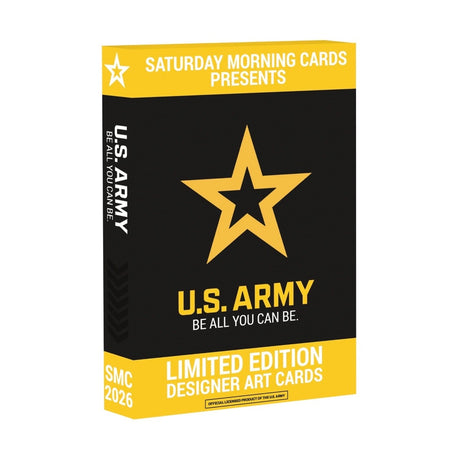
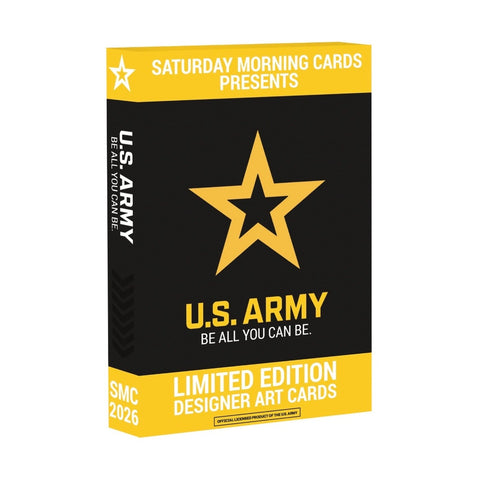
U.S. Army collectibles can connect an interest in American history with the visual appeal of a small artwork. Mystery Collective's relevant catalog entries are Saturday Morning Cards' U.S. Army Single-Card Box and its ten-box sealed case. These are contemporary art-card products. Their historical subject should not be confused with the age of the objects themselves, and the Army theme does not make a card a military-issued artifact.
The Army's official timeline dates its establishment to June 14, 1775, before the Declaration of Independence. Congress's action brought the New England force into a continental organization representing the colonies more broadly. George Washington was selected as commander in chief the following day. These dates offer useful context for a collection label. They also help distinguish the institution's founding from later milestones, anniversaries and merchandise releases. A card display can begin with that chronology while remaining focused on the artwork actually present.
Look beyond a single battlefield image
The National Museum of the United States Army's Army and Society gallery examines the institution's relationship with the American public. Its examples include a 1918 Standard B Liberty Truck and a radar set, placing technology alongside military history. The gallery also presents a World War I bond-drive costume and the Academy Award associated with the Army-produced documentary Seeds of Destiny. Together, these objects show how transportation, public communication and film can belong in the same historical conversation.
That breadth provides an interesting way to think about an Army-themed collection. You might concentrate on visual identity, illustrated history or remembrance rather than assembling a generic combat scene. The museum examples are research leads, not a checklist of subjects promised inside these card boxes. Keep those categories separate: historical context explains why the theme matters, while the exact product description establishes what the purchase contains.
Put individual experiences beside the institution
The museum's Soldiers' Stories exhibit uses portraits and biographical information on freestanding pylons to introduce people from different historical periods. One profile concerns Enid Mack Pooley and the bilingual telephone operators known as the Hello Girls, who supported American forces during World War I. Another introduces Charles P. Bailey, a Tuskegee Airman who served with the 99th Fighter Squadron. These accounts make a large institutional history easier to approach through particular lives and responsibilities.
A collector can borrow that attention to context without claiming a card depicts someone it does not name. If the artwork identifies a person, research that attribution before adding a biography to the display. If it instead presents a general soldier or symbol, describe what is visible and leave the identity open. A family photograph or short, accurately dated note may sit nearby, but the connection should be explained rather than presented as provenance for the collectible.
What the single-card box actually contains
Each box holds one random art card in a printed magnetic holder.
Keep the artwork and its documentation together
Record the release name and identifying details visible on the actual card. If an artist signature is legible, preserve it exactly rather than guessing. Keep historical notes separate so later research can improve the display without changing the object’s identity.
A restrained label can give the title and one verified historical connection. The purpose of the collection can remain modest: a few well-understood pieces that invite closer attention to history.
FAQs
Was the Army established before independence?
Yes. The official timeline dates its establishment to June 14, 1775, before the Declaration of Independence.
Are the museum people and artifacts listed here confirmed card subjects?
No. They provide context from the National Museum of the United States Army, not a manufacturer-confirmed card checklist.
Sources
Pre-orders
Pre-orders are open
Reserve upcoming releases before they land. Full refund any time before it ships.