
The Collector’s Shelf
Topps
Explore Topps trading cards, baseball heritage, Star Wars and Marvel releases, with practical advice on checklists and collecting formats.
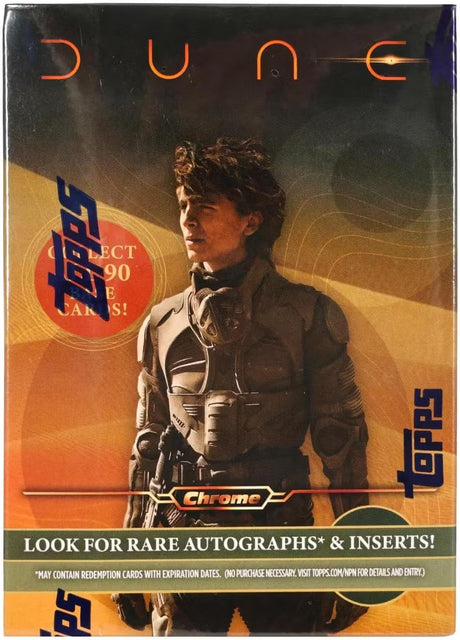
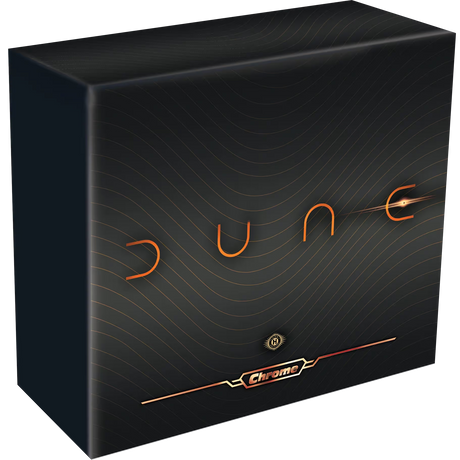
 Cards
Topps 2024 Chrome Dune Value Box / Blaster Box
Topps
$58.99In stock Cards
Topps 2024 Chrome Dune Hobby Box
Topps
$176.99In stockExplore Topps trading cards, baseball heritage, Star Wars and Marvel releases, with practical advice on checklists and collecting formats.
A gum company becomes a card-making institution
Topps has a history that extends beyond the sport most closely associated with its name. The National Baseball Hall of Fame traces the company's founding to the Shorin brothers in 1938 and describes its early gum business. Baseball cards became a way of connecting an inexpensive physical object with the people and stories fans followed. That combination of printed information, recognizable personalities and the pleasure of assembling a set remains useful context for understanding the brand.
Sy Berger and Woody Gelman developed the celebrated 407-card 1952 baseball design, combining photographs, team identification and player information. The Hall of Fame identifies 1957 as the adoption of the familiar two-and-a-half by three-and-a-half-inch size. Those milestones shaped the physical format as well as the imagery.
Sy Berger's 2004 interview with the Society for American Baseball Research supplies the designer's perspective. He emphasized the larger card, strong color, team logo and the combination of a previous season's statistics with career totals. These were choices about how much information a fan could hold and compare, not simply decoration added around a portrait.
Read that way, the front and back perform complementary jobs. Color and identification establish the player immediately; the statistical side places one season inside a longer career. The 1952 design's influence is easier to understand through that division of information than through the auction reputation of one famous card. Berger's account also gives Woody Gelman a place in the design story, preserving the collaboration behind a format often associated with a single name.
Seventy-five years is a milestone, not a condition grade
Topps marked seventy-five years of baseball cards in 2026 using 1951 as its starting point. That anniversary precedes the famous 1952 design by one year. The distinction separates a product history from the particular issue that became its best-known visual reference.
Comparing card backs or team lettering across eras makes design history visible within a baseball collection. A modern tribute to an older layout is another dated release, not an original card from the period it recalls.
The Hall of Fame's examination of the 1951 Red Backs and Blue Backs explains why the one-year distinction matters. Those small cards resembled a playing-card deck: a player portrait sat within a colored diamond, and printed outcomes such as singles, doubles and balls enabled a baseball game. Each color comprised fifty-two cards. Their original design therefore supported play as well as collecting.
The move from that game-oriented format to the larger 1952 portrait-and-information card was a substantial change in use. A collector comparing the two is not merely looking at successive annual designs; the relationship between image, rules and player information has changed. It is a compact example of how Topps developed its medium, and why a brand history should include less familiar experiments alongside celebrated releases.
Star Wars brings movie storytelling into the binder
Topps' relationship with Star Wars reaches back to 1977, as Fanatics' September 2024 announcement records. Movie cards offer a different organizing principle from baseball statistics: a collector can follow characters, costumes and settings across a fictional world. A binder groups those images into a sequence chosen by its owner, whether that follows a film's story or concentrates on one character.
The catalog's 2025 Star Wars Smugglers Outpost hobby box belongs to a much later release. Its contemporary date and specific set title should remain attached to the object even when the images recall films from the original trilogy.
Disney, Marvel and Pixar broaden the collecting routes
In September 2024, Fanatics announced an expanded Topps agreement covering global Disney, Marvel and Pixar trading-card rights, including physical and digital products, while continuing its Star Wars collaboration. The announcement described an expansion of an existing relationship, not the invention of entertainment trading cards. For collectors, the useful development is the wider set of worlds that can appear under the same manufacturer.
The catalog reflects that breadth through 2025 Marvel the Collector, 2026 Topps Neon Marvel and 2026 Topps Chrome Marvel Comics. These are separate named releases. The agreement's coverage of physical and digital cards also describes distinct formats, not a promise that ownership of one includes the other.
The card image and the package
Hobby and mega boxes appear among the catalog's Topps products. The label identifies a configuration within a named release; it is not a universal contents recipe. Year, set and package belong together when comparing products.
For a collector interested in a particular picture, an identified single card offers a known image. A sealed box offers the opening experience and its stated contents, which may involve random selection. Those are different ways to approach the same visual subject.
Use the checklist as a map, not a pack prediction
Topps' official checklist index separates releases, including entertainment sets. A checklist maps the cards associated with a product; it is not a prediction that every listed card appears in one box.
Card numbers, named insert groups, parallels and printed numbering organize different kinds of variation. Following those labels preserves what a set actually contains instead of using ‘rare’ as a substitute for every distinctive finish or design.
FAQs
Was the famous 1952 set the first Topps baseball release?
Topps dates its baseball anniversary from 1951. The 1952 set is a separate landmark in its card design history.
Does a checklist guarantee what comes in a box?
No. Use a checklist to identify cards and categories, then consult the exact product’s stated configuration. A list of possible cards is not a promise that one box contains them all.
Sources
Pre-orders
Pre-orders are open
Reserve upcoming releases before they land. Full refund any time before it ships.