
The Collector’s Shelf
The Walking Dead
Explore The Walking Dead’s comic-to-television origins, survivor relationships and evolving character interpretations across figures and card formats.
Pre-order: The Walking Dead
All pre-orders →

Explore The Walking Dead’s comic-to-television origins, survivor relationships and evolving character interpretations across figures and card formats.
Survival is a story about people as well as walkers
AMC’s 2010 launch announcement described The Walking Dead as an adaptation of Robert Kirkman’s comic published by Image Comics. It introduced a group of survivors led by police officer Rick Grimes, played by Andrew Lincoln, searching for a secure home after a zombie apocalypse. The network announced a ninety-minute premiere for October 31, 2010, beginning a six-episode first season. These details establish the television branch without collapsing it into the comic’s own publication history.
For collecting, the search for safety offers a richer starting point than simply assembling threatening figures. A survivor group can emphasize companionship, uncertainty or leadership. Decide which of those ideas interests you before choosing a scene. A small number of carefully related characters can suggest a difficult shared journey, while an unstructured crowd may make their individual significance harder to see. Human relationships can remain the focus even within a horror-themed collection.
A later chapter centers a particular relationship
AMC’s January 2024 announcement for The Walking Dead: The Ones Who Live presented the return of Andrew Lincoln as Rick and Danai Gurira as Michonne, with a February 25 premiere planned for AMC and AMC+. The description framed the series around two changed people separated by distance and power. That is a specific continuation within the wider television world, not simply another name for the original series.
A collection focused on that chapter can therefore use Rick and Michonne as its organizing relationship. Keep the series subtitle visible when identifying products, especially when the same character appears in releases from different points in the story. A retrospective can deliberately cross those boundaries, but a scene-based display needs closer attention to the represented period. The difference is one of purpose: tracing a character over time is not the same project as recreating a particular shared moment.
Read the whole subtitle before pairing figures
The catalog includes HIYA Exquisite Mini Series 1/18 Scale 4 Inch The Walking Dead The Ones Who Lived Rick Action Figure and HIYA Exquisite Mini Series 1/18 Scale 4 Inch The Walking Dead The Ones Who Lived Michonne Action Figure. The local titles use “Who Lived,” while AMC’s official series title is The Ones Who Live. Preserve the exact listing when searching the catalog, but use the correct production title when discussing the television series.
This small naming discrepancy shows why a full product record matters. Compare the manufacturer’s description and images before assuming the catalog wording settles every identification detail. For a paired display, look at the represented costumes and expressions as well as the characters’ names. A strong relationship-focused arrangement gives both subjects enough visual attention and avoids letting an accessory or foreground element conceal the expressions that make the pairing meaningful.
A survivor collection does not need to cover every era
Mystery Collective’s Hiya entries include HIYA Exquisite Mini Series 1/18 Scale 4 Inch The Walking Dead Glenn Action Figure, HIYA Exquisite Mini Series 1/18 Scale 4 Inch The Walking Dead Morgan Action Figure and HIYA Exquisite Mini Series 1/18 Scale 4 Inch The Walking Dead Ezekiel Action Figure. These offer several directions for a character survey. Their shared format labels do not establish that the represented versions belong together in one specific screen scene.
Choose whether you want a retrospective of memorable survivors or a tightly bounded moment. For the former, individual labels can explain why each character belongs. For the latter, verify the exact portrayals and costume references before building the setting. Avoid using a generic ruined backdrop to imply historical consistency that the figures do not actually share. A simple portrait arrangement is often the more honest and effective choice when the collection spans different parts of a long-running story.
Transformation changes the meaning of a portrait
Two records distinguish HIYA Exquisite Mini Series 1/18 Scale 4 Inch The Walking Dead Merle Action Figure from HIYA Exquisite Mini Series 1/18 Scale 4 Inch The Walking Dead Merle Walker Version Action Figure. The latter wording changes how a viewer reads the subject and can reveal story information. Treat that title as potentially spoiler-bearing when sharing a collection with someone still watching the series.
A comparison of those interpretations could focus on how a familiar identity is altered, but it need not become a graphic scene. A separate display area or a discreet label can give the theme room without making it the first thing every visitor sees. Consider the setting in which the collection will be viewed. Horror imagery can be approached through character study and visual storytelling as well as shock, and the most effective arrangement is the one that matches your intended audience and personal interest.
Cards and figures offer different kinds of retrospective
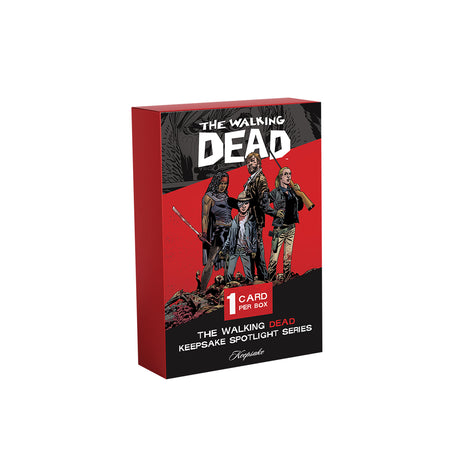
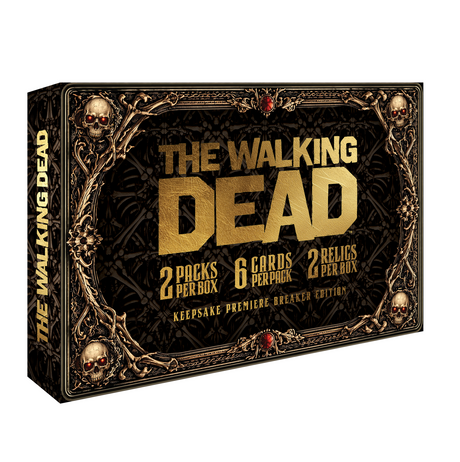
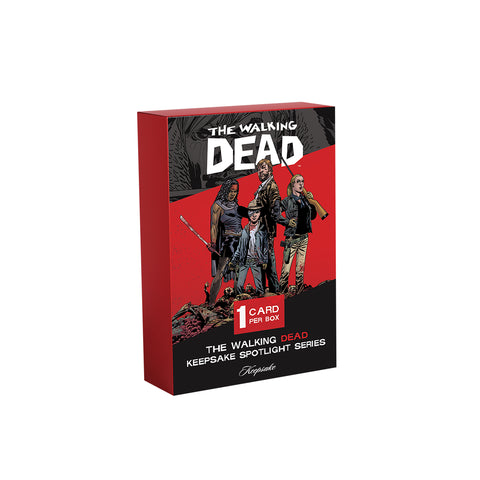
The Walking Dead Keepsake Spotlight Series Box and The Walking Dead Keepsake Premiere Breaker Box are Keepsake Cards entries. Their titles identify product formats, not guaranteed characters, autographs or scenes. A collector interested in a particular survivor should consult the exact checklist and release information rather than expecting an unopened box to complete a character-centered display.
If you already have identified cards, they can provide a sequence of portraits alongside a smaller number of figures. Keep the visual hierarchy clear so the printed imagery supplies context instead of becoming background clutter. Relevant guides or updates can help resolve edition questions, but each claim should remain attached to the specific release. A focused Walking Dead collection can trace relationships or transformation without pursuing every product. Local catalog entries support discovery and comparison; they do not confirm current stock or delivery timing.
FAQs
Are the comic and television versions interchangeable for collecting?
No. The television series adapts the comic, but a collectible should be identified by the particular version it represents. Do not infer a screen costume or actor likeness from the broad franchise name alone.
Can a Walking Dead display reveal spoilers?
Yes. Product names, transformed versions and character groupings may disclose developments. Consider labels and placement when sharing the collection with new viewers, and distinguish a deliberate retrospective from a scene intended to represent one point in the story.
Sources
Pre-orders
Pre-orders are open
Reserve upcoming releases before they land. Full refund any time before it ships.