
The Collector’s Shelf
The Hunger Games
Explore Finnick Odair’s Catching Fire introduction, costume and changing loyalties through the specific 4.8-inch Youtooz figure in the catalog.
Pre-order: The Hunger Games
All pre-orders → Pre-order
The Hunger Games: Sunrise on the Reaping President Snow Funko Pop! Vinyl Figure
Funko
Releases Jul 31, 2027
Pre-order
The Hunger Games: Sunrise on the Reaping Lenore Dove Funko Pop! Vinyl Figure
Funko
Releases Jul 31, 2027
Pre-order
The Hunger Games: Sunrise on the Reaping Maysilee Donner Funko Pop! Vinyl Figure
Funko
Releases Jul 31, 2027
Pre-order
The Hunger Games: Sunrise on the Reaping Haymitch Abernathy Funko Pop! Vinyl Figure
Funko
Releases Jul 31, 2027
Pre-order
The Hunger Games: Sunrise on the Reaping Effie Trinket Funko Pop! Vinyl Figure
Funko
Releases Jul 31, 2027
 Pre-order
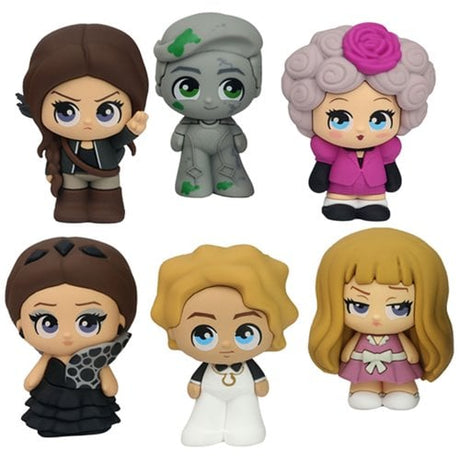
The Hunger Games CheeBee Cuties Series 1 2 1/2-Inch Mini-Figure Case of 12
The Loyal Subjects
 Pre-order
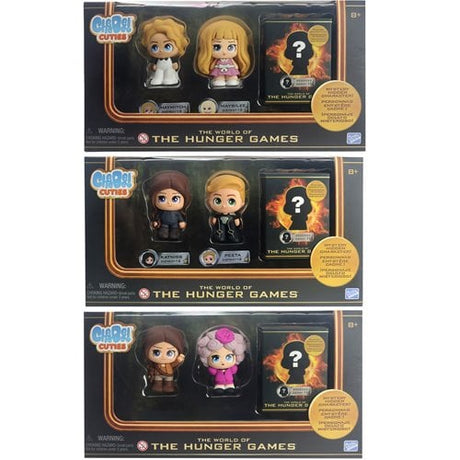
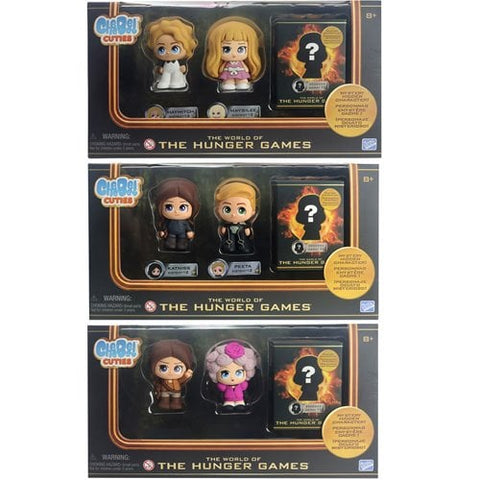
The Hunger Games CheeBee Cuties Mini-Figure 3-Pack
The Loyal Subjects
Explore Finnick Odair’s Catching Fire introduction, costume and changing loyalties through the specific 4.8-inch Youtooz figure in the catalog.
A small gesture makes a recognizable entrance
The Hunger Games can be approached through one deceptively casual encounter. Finnick Odair’s Youtooz figure stands 4.8 inches tall, offering a sugar cube with his right hand while his left rests at his belt. A braided skirt, sandals and pendant complete the look. Youtooz calls the colorway Youngest Victor. This is the Finnick in the catalog: an introduction built around confidence and invitation, rather than an arena action pose.
Sam Claflin identifies the sugar-cube encounter as Finnick's first scene in Catching Fire. The actor's SFX interview places that apparently effortless entrance within a demanding role.
Look beyond the victor’s public confidence
The film’s production notes introduce Finnick as a District 4 victor who won the sixty-fifth Hunger Games at fourteen. They also explain what director Francis Lawrence sought in casting Sam Claflin: physical ability and charm supported by emotional depth. Claflin describes a man who struggles to reveal his feelings because he believes he is constantly being watched. Those observations make the confident introduction more interesting than a straightforward display of vanity.
Scholastic's reading guide asks how cameras, stylists, interviews and sponsors shape tributes' behavior. That emphasis places public performance within the series' larger concerns, rather than treating a glamorous introduction as a detour from its politics.
The costume connects the novel, film and figure
Costume designer Trish Summerville told Vanity Fair that Finnick’s screen outfit used metallic gold yarn woven into a kilt shape. She was balancing the novel’s revealing net concept with movement and the film’s PG-13 rating. Her explanation establishes an adaptation choice rather than a literal transfer from the page.
Summerville made similarly practical choices elsewhere in Catching Fire. Katniss and Peeta's chariot outfits used laser-cut leather over gold fabric, giving the visual-effects fire openings through which to appear. For Katniss's wedding dress, she worked with designer Tex Saverio on a structure that would support the garment while allowing it to spin. The Capitol's changing fashions also allowed a different visual direction from the first film. Finnick's woven costume belongs to that coordinated design work, where texture, movement and story function mattered together.
Finnick’s importance grows through relationships
Scholastic’s reading guide places Finnick within Catching Fire’s questions about resistance and community. It asks readers to consider his rescue of Peeta, the contributions of individual allies and Katniss’s recognition that she needs other people. Its later comparison prompts return to Finnick and Johanna’s importance across Catching Fire and Mockingjay. The publisher’s approach treats these relationships as part of the story’s structure, not incidental background around the competition.
Those relationships develop inside a political system that turns children into televised competitors. The publisher's synopsis places Panem in a future North America, with a wealthy Capitol controlling twelve districts. Katniss enters the original Games by volunteering for her sister, and the story repeatedly tests survival against loyalty. Catching Fire extends that problem to experienced victors whose public celebrity has not made them free. A Finnick figure can evoke both the carefully managed introduction and the later question of whom Katniss can trust.
A larger screen world for Catching Fire
The arena sequences were photographed for IMAX, creating a visual opening into the environment from Katniss's perspective. Cinematographer Jo Willems and the camera team worked with cranes, cable systems and handheld photography in the jungle. The poisonous fog was added through visual effects to footage shot without it, with the effect matched to the actors' movement and the surrounding vegetation. These production choices underline the contrast between a controlled public entrance such as Finnick's and the unstable physical world that follows.
The entrance becomes the collectible
Claflin says the sugar-cube introduction was also an audition scene. He worried that familiarity would make it over-rehearsed, so preserving freshness was part of the challenge. He welcomed both the physical demands and the character's complexity, qualities concealed beneath Finnick's confident manner.
Youtooz describes flame imagery and a Mockingjay pin on the packaging exterior, with a forest scene inside. The release includes an embossed protective outer sleeve and a fitted plastic protector. These are presentation details, not evidence of rarity or future value.
FAQs
Which Finnick scene does this Youtooz interpretation recall?
It recalls his sugar-cube introduction in The Hunger Games: Catching Fire, played on screen by Sam Claflin. The costume interview and Claflin’s account connect the figure’s look and gesture to that film scene.
Does Youngest Victor describe a childhood version of Finnick?
Youngest Victor is Youtooz’s colorway label. The depicted outfit and sugar-cube gesture connect to his Catching Fire introduction, rather than a scene of him winning his earlier Games.
Sources
Pre-orders
Pre-orders are open
Reserve upcoming releases before they land. Full refund any time before it ships.