
The Collector’s Shelf
Rocket Power
Explore Rocket Power’s sports-and-friendship identity through Thrilljoy’s Otto Rocket: 2026 Summer Event PIX! and the series’ original television context.
Pre-order: Rocket Power
All pre-orders →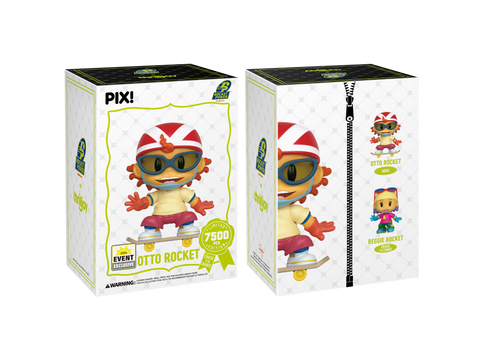
Explore Rocket Power’s sports-and-friendship identity through Thrilljoy’s Otto Rocket: 2026 Summer Event PIX! and the series’ original television context.
Otto Rocket, board and helmet
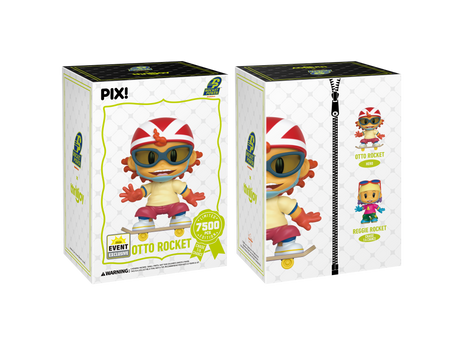
Thrilljoy's PIX! Otto Rocket: 2026 Summer Event is the catalog's Rocket Power figure. Its skateboard, helmet, orange hair and sunglasses put Otto's sporting identity at the center of the composition. A yellow shirt, red shorts and white sneakers provide distinct blocks of color. The design recalls a character in motion even though the manufacturer does not describe working wheels or articulated joints.
Thrilljoy specifies a 7,500-piece production run for this edition. The Summer Event subtitle identifies the modern collectible, not a television episode or the show’s original launch.
A beach-town cartoon rooted in family observation
Animation World Network's contemporary announcement scheduled Rocket Power's Nickelodeon premiere for August 16, 1999. It credited Arlene Klasky and Gabor Csupo as co-creators and executive producers and placed the friends in Ocean Shores, a fictional Southern California beach community. Waves, ramps and slopes provided the setting for a group whose ambitions were expressed through sport.
Nickelodeon Animation later shared Klasky's explanation that her own children inspired the series. She also connected it to growing up near Orange County beach towns and observing their surfing culture. That personal reference gives Ocean Shores a more specific foundation than a generic sunny backdrop. The show translated a recognizable social environment into animation, where local vocabulary, clothing and favored gathering places could become part of the characters' identities.
Researching how the sport should look and sound
A contemporary OC Weekly report describes the producers visiting Surfer magazine's staff as they sought informed reactions to the show. Co-producer Michael Bloom explained the wish to make its portrayal convincing. The report also identifies Surfer contributor Gabe Sullivan as a research consultant, particularly for the language used by the characters. Slang had to sound appropriate while remaining understandable and suitable for a children's program.
The same report describes surf publications serving as visual references for the production. This is a concrete link between animation development and the culture being depicted: drawing an athlete requires information about posture, equipment and movement as well as a stylish outfit. Otto's board-centered collectible draws on a character whose original world was built around that attention to sporting behavior. The research concerned the series; it does not establish who sculpted the later figure.
Ambition is only one part of the ensemble
Paramount's first-season descriptions include a possible corporate sponsorship for Otto and an incident in which a surfing photographer overlooks Reggie. These stories make recognition and fairness part of the sporting world. Being skilled does not settle every disagreement, and the person who attracts attention is not necessarily the only person whose contribution matters.
The second-season guide broadens that idea. Rocket Repairs gives the friends a sporting-equipment repair venture, while That Old Skateboard involves Sam restoring a discarded board. Other episodes move into hockey and snowboarding. The equipment becomes something to maintain, adapt and share rather than merely a badge of status. This variety helps explain why the series can feature an individual as confident as Otto while still depending on Reggie, Twister and Sam as an ensemble.
The sporting world grows beyond a single beach
Paramount's third-season guide brings professional skateboarding into the story through Enter the Hawk-trix, in which the group pursues a rumor about Tony Hawk. Another episode contrasts the new Skatopia skate-park chain with the friends' loyalty to Conroy and Madtown. These premises connect athletic aspirations with the places and people that support them.
Reggie's writing and Sam's technical interests also appear in that season's descriptions: her zine prompts a contest over the town's leading extreme athlete, while Sam creates a game based on his friends. The group therefore produces media about its own world as well as participating in sport. A skateboard captures one immediate aspect of Otto, but the surrounding series includes storytelling, inventive hobbies and questions about how an athlete's reputation is made.
An early production record and a later collectible
The Paley Center holds a short Rocket Power item dated November 30, 1998, with a running time of four minutes and 35 seconds. Its credits identify Steve Loter as director and list development contributions by Vic Wilson, Eryk Casemiro and John F. Hardman. That archive entry documents work preceding the series premiere. Its date should not be substituted for the August 1999 television launch.
Keeping those stages separate gives the 2026 Otto figure a clearer place in the chronology: early production, broadcast series, then a later character edition. The collectible returns to the show's recognizable mix of equipment, clothing and attitude. Its strongest connection is not simply nostalgia for a year, but the particular beach-community world in which Otto's confidence and his friendships were continually tested.
FAQs
Which Rocket Power figure appears in this theme?
Thrilljoy PIX! Otto Rocket: 2026 Summer Event, featuring Otto on his skateboard.
Is Ocean Shores the name of the event?
No. Ocean Shores is the fictional beach community described in the original series announcement. Summer Event identifies the modern Thrilljoy product edition, not the show’s setting or original premiere.
Sources
- Thrilljoy PIX! Otto Rocket: 2026 Summer Event
- Paramount+ Rocket Power season one
- Animation World Network original premiere announcement
- Nickelodeon Animation: Arlene Klasky on Rocket Power’s inspiration
- OC Weekly: contemporary report on Rocket Power’s surfing research
- Paley Center early Rocket Power production record
- Paramount+ season two episode guide
- Paramount+ season three episode guide
Pre-orders
Pre-orders are open
Reserve upcoming releases before they land. Full refund any time before it ships.