
The Collector’s Shelf
Riftbound
Explore Riftbound’s champion relationships, paired illustrations and regional art interpretations through a focused League of Legends collecting lens.

Pre-order: Riftbound
All pre-orders → Pre-order
Riftbound: League of Legends TCG Legacy Vault
Riot Games / UVS Games
Releases Jan 29, 2027
Pre-order
Riftbound: League of Legends TCG Legacy Champion Deck: Tryndamere
Riot Games / UVS Games
Releases Jan 29, 2027
Pre-order
Riftbound: League of Legends TCG Legacy Champion Deck: Lux
Riot Games / UVS Games
Releases Jan 29, 2027
Pre-order
Riftbound: League of Legends TCG Legacy Champion Deck: Garen
Riot Games / UVS Games
Releases Jan 29, 2027
Pre-order
Riftbound: League of Legends TCG Legacy Champion Deck: Ashe
Riot Games / UVS Games
Releases Jan 29, 2027
Pre-order
Riftbound: League of Legends TCG Legacy Champion Deck Display
Riot Games / UVS Games
Releases Jan 29, 2027
Pre-order
Riftbound: League of Legends TCG Legacy Booster Pack
Riot Games / UVS Games
Releases Jan 29, 2027
Pre-order
Riftbound: League of Legends TCG Legacy Booster Display
Riot Games / UVS Games
Releases Jan 29, 2027
Pre-order
Riftbound Gift of the Rift Bundle
Riot Games / UVS Games
Releases Dec 4, 2026
 Cards
Riot Games Riftbound - Origins Proving Grounds Box Set
Riot Games
$224.99In stock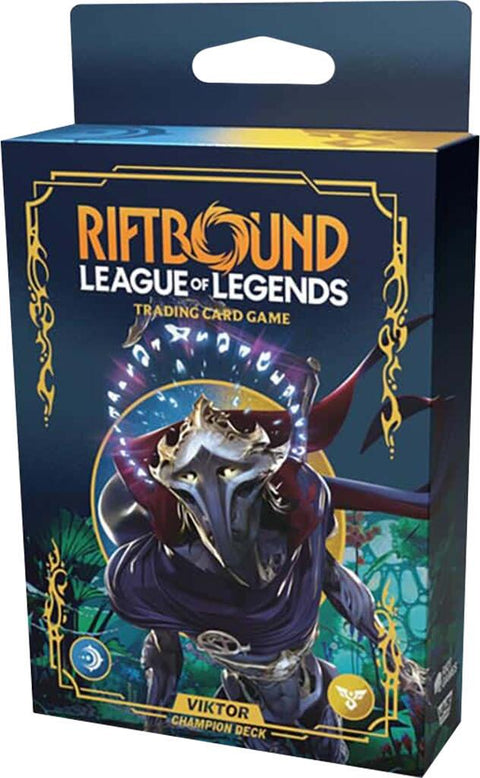 Cards
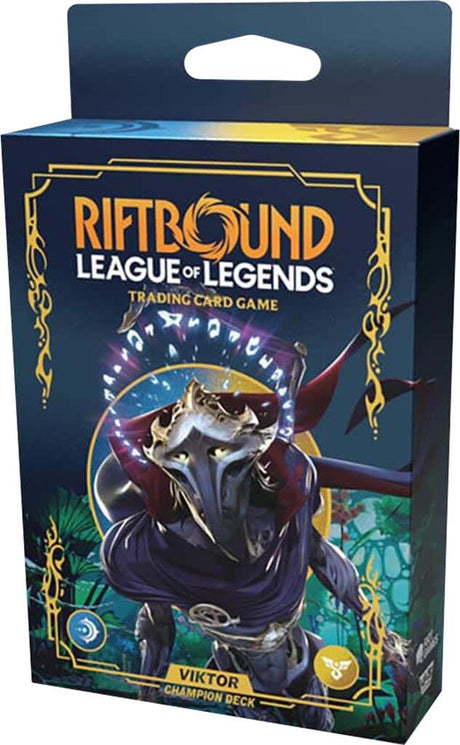
Riot Games Riftbound - Origins Champion Deck (Viktor)
Riot Games
$64.99In stock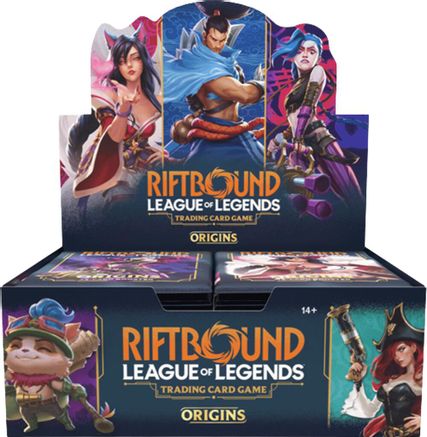 Cards
Riot Games Riftbound League of Legends TCG - Origins Booster Display
Riot Games
$453.99In stock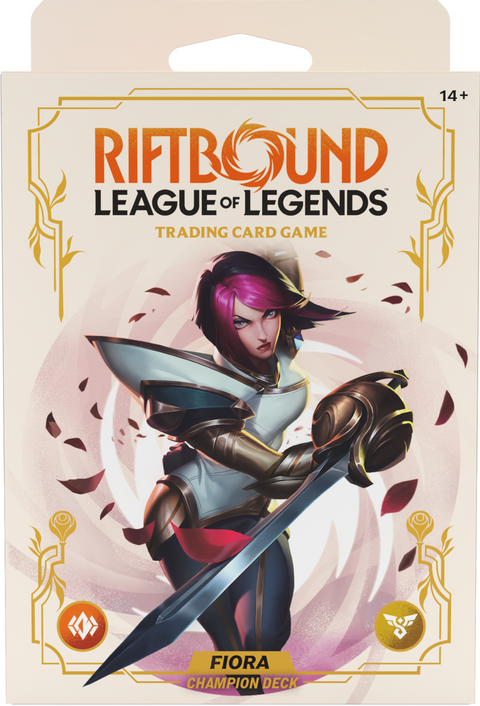 Cards
Riot Games Riftbound LoL TCG - Spiritforged Champion Deck (Fiora)
Riot Games
$95.99In stock Cards
Riot Games Riftbound LoL TCG - Spiritforged Pre-Rift Kit
Riot Games
$82.99In stock Pre-order
Riftbound Spiritforged - Booster Display
Riftbound
$253.99 Cards
Riftbound League of Legends TCG - Unleashed Booster Display
Riftbound
$230.99In stock Pre-order
Riot Games Riftbound: League of Legends TCG — Vendetta Booster Display
Riot Games
$149.99Explore Riftbound’s champion relationships, paired illustrations and regional art interpretations through a focused League of Legends collecting lens.
A champion can be the beginning of a relationship
Riftbound offers a way to explore League of Legends characters through illustrated encounters rather than treating every champion as an isolated portrait. The official Vendetta overview makes relationships particularly explicit: its Rival Overnumbers are designed as diptychs, with paired images representing friends, family, rivals and enemies. That creative choice gives a collector a useful alternative to organizing only by character name or card number.
Begin with a relationship you want to understand visually. Look for how the two images address one another through direction, distance or contrasting attitudes. A pairing should earn its place through what the pictures communicate, not simply because two familiar names appear together. Keep your own reading separate from the publisher's stated relationship. If you do not know the story behind a pair, treat that uncertainty as a research question rather than inventing a conflict to make the display more dramatic.
Read a diptych as two works and one composition
A paired illustration invites two kinds of attention. Examine each half independently, then look at what changes when they are placed together. A line may continue, a gesture may acquire a target or a contrast may become more deliberate. Do not assume every visual connection requires the cards to touch; spacing and the way they are presented can alter the viewer's experience of the pair.
Before arranging a permanent display, verify the intended partner through an official gallery or release explanation. A similar palette is not enough to establish a matching pair. Preserve each card's identity in your notes even when you treat the images as one composition. This helps avoid separating a meaningful pairing accidentally when reorganizing the collection later. If you share photographs, credit both illustrations where the published information identifies their creators, and explain which connections are visible facts and which are your interpretation.
Korea’s launch adds a specific artistic chapter
Riot's Korean launch announcement describes a new Ahri, Nine-Tailed Fox Overnumber for Korean Origins packs, created by Riftbound art director Allen Song with a reference to Dynasty Ahri. It also identifies a Yasuo, Remorseful promotional illustration by South Korean artist Kim Star. These examples connect the card game's visual development to a particular launch context, rather than suggesting that every language edition has identical artwork.
For an art-led collection, record that context without turning regional identity into a prediction about rarity or value. Distinguish a newly illustrated card from an existing image with a launch stamp; the same announcement describes Jinx, Demolitionist in the latter terms. Those are different kinds of variation. Ask which difference matters to your project: the composition itself, the cultural reference, the credited artist or the record of an event. A clear answer prevents several visually related objects from becoming interchangeable in your notes.
A returning visual world can change format
Vendetta's official overview distinguishes Crystal Rose alternate art celebrating Wild Rift's returning skinline from artwork created for Riftbound's Overnumber presentations. This is a useful reminder that a champion's appearance can carry a history beyond a single card set. A visual treatment may invite comparison across League-related media, but the source and exact presentation still need to be identified.
When investigating such a connection, compare documented details rather than assuming every costume similarity proves the same origin. Look at the full image, its title and the official explanation. You can enjoy a design without knowing its complete background, but label an unresolved resemblance honestly. A small reference sheet with confirmed connections and open questions is more useful than a confident story assembled from impressions. It lets the collection develop as your understanding improves, without requiring you to undo unsupported claims later.
Use champion names to narrow the research
Mystery Collective includes Riftbound: League of Legends TCG – Vendetta Showdown Zed vs Shen Deck Display, alongside Spiritforged Champion Deck Displays featuring Fiora and Rumble. The catalog also has Unleashed Champion Deck Displays for Vex and Vi. These exact names point toward different character-led research paths. A product's featured champion does not by itself identify every illustration or version included in that listing.
If your interest is the relationship between Zed and Shen, start with the documented contents and official imagery for that specific product rather than assuming it contains every paired artwork discussed elsewhere. If you prefer following one champion across interpretations, compare the relevant card identities before choosing a display product. Keep the project's purpose in ordinary language: studying one personality, exploring a rivalry or comparing a visual theme. That purpose should guide the next question you ask of the catalog.
Make room for quiet character details
An art collection does not need every image to be a dramatic confrontation. A reserved expression, a small environmental cue or a pause in movement can offer a different view of a familiar champion. Place such images where they can be noticed rather than surrounding them with competing focal points. A sequence alternating close studies and broader scenes may reveal relationships that a simple alphabetical arrangement would hide.
Use relevant guides to deepen a specific story question and updates or Radar coverage to discover new credited artwork. Then assess the image on its own terms. Does it add a new perspective, or repeat one you already have? Keep a short explanation of why each chosen piece belongs. Riftbound's theme can become a personal study of character and relationship, with the card format providing structure rather than dictating an endless checklist. The strongest collection is one whose connections you can explain clearly and support where they depend on published facts.
FAQs
Does a launch stamp mean a card has new artwork?
Not necessarily. Riot’s Korean launch announcement describes Jinx, Demolitionist as using original art with a launch stamp, while identifying new artwork for other cards. Check the exact version.
How should I identify a paired illustration?
Use an official release explanation or gallery to verify the intended pair, then retain both card identities and artist credits. Matching colors alone do not establish that two cards form a diptych.
Sources
Pre-orders
Pre-orders are open
Reserve upcoming releases before they land. Full refund any time before it ships.