
Collection
Riftbound Collectibles & collecting guide
Pre-order: Riftbound
All pre-orders → Pre-order
Riftbound: League of Legends TCG Legacy Vault
Riot Games / UVS Games
Releases Jan 29, 2027
Pre-order
Riftbound: League of Legends TCG Legacy Champion Deck: Tryndamere
Riot Games / UVS Games
Releases Jan 29, 2027
Pre-order
Riftbound: League of Legends TCG Legacy Champion Deck: Lux
Riot Games / UVS Games
Releases Jan 29, 2027
Pre-order
Riftbound: League of Legends TCG Legacy Champion Deck: Garen
Riot Games / UVS Games
Releases Jan 29, 2027
Pre-order
Riftbound: League of Legends TCG Legacy Champion Deck: Ashe
Riot Games / UVS Games
Releases Jan 29, 2027
Pre-order
Riftbound: League of Legends TCG Legacy Champion Deck Display
Riot Games / UVS Games
Releases Jan 29, 2027
Pre-order
Riftbound: League of Legends TCG Legacy Booster Pack
Riot Games / UVS Games
Releases Jan 29, 2027
Pre-order
Riftbound: League of Legends TCG Legacy Booster Display
Riot Games / UVS Games
Releases Jan 29, 2027
Pre-order
Riftbound Gift of the Rift Bundle
Riot Games / UVS Games
Releases Dec 4, 2026
 Trading Cards
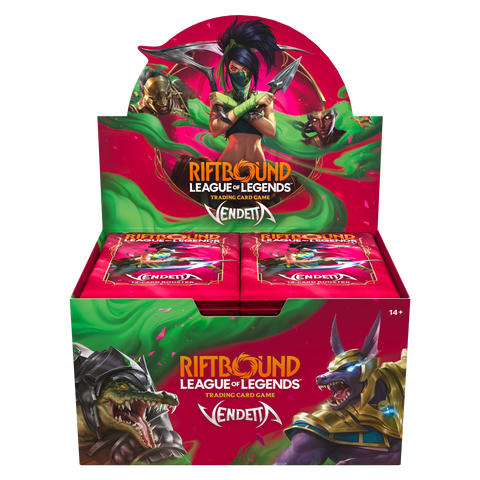
Riftbound: League of Legends TCG Vendetta Booster Display
Riot Games / UVS Games
 Trading Cards
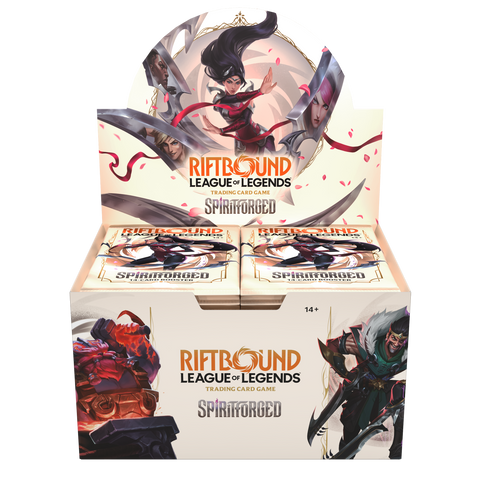
Riftbound: League of Legends TCG Spiritforged Booster Display
Riot Games / UVS Games
 Trading Cards
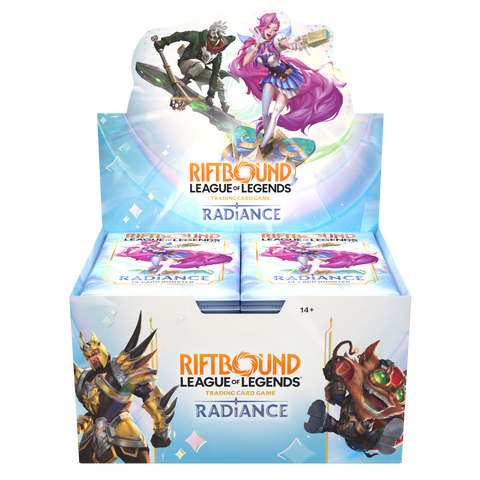
Riftbound: League of Legends TCG Radiance Booster Display
Riot Games / UVS Games
 Cards
Riot Games Riftbound - Origins Proving Grounds Box Set
Riot Games
 Cards
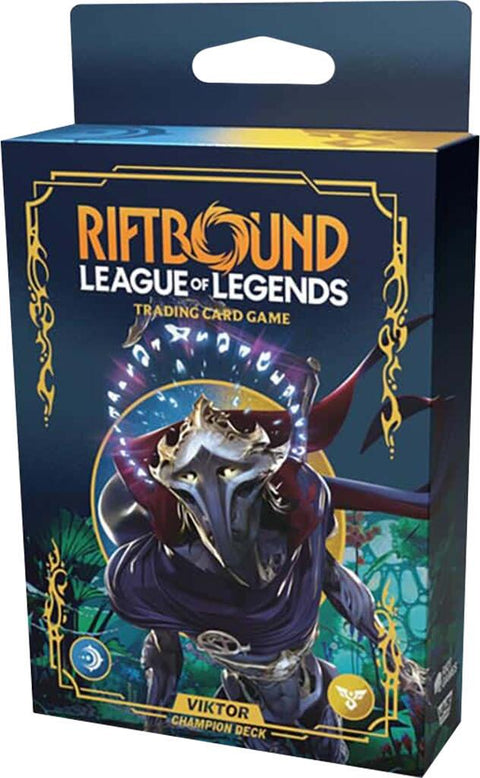
Riot Games Riftbound - Origins Champion Deck (Viktor)
Riot Games
 Cards
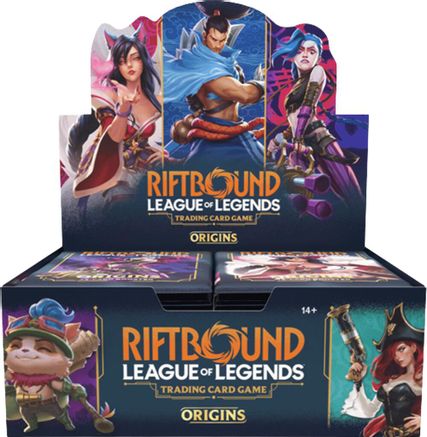
Riot Games Riftbound League of Legends TCG - Origins Booster Display
Riot Games
 Cards
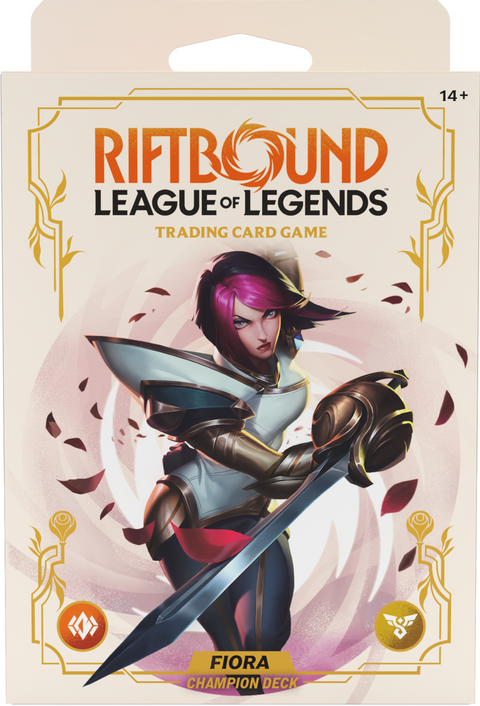
Riot Games Riftbound LoL TCG - Spiritforged Champion Deck (Fiora)
Riot Games
 Cards
Riot Games Riftbound LoL TCG - Spiritforged Pre-Rift Kit
Riot Games
 Pre-order
Riot Games Riftbound: League of Legends TCG — Vendetta Booster Display
Riot Games
 Pre-order
Riftbound Spiritforged - Booster Display
Riftbound
 Cards
Riftbound League of Legends TCG - Unleashed Booster Display
Riftbound
Explore Riftbound trading cards, Origins history, Champion and Showdown Decks, collectible treatments and practical deck-building research.
League of Legends moves into a physical card format
Riftbound brings League of Legends characters into a physical trading-card game. Mystery Collective groups its releases under the Riftbound brand, distinct from figures and other merchandise featuring the same champions.
Riot's English launch announcement set October 31, 2025 as the release date for Origins. It introduced Proving Grounds for learning with two to four players, ready-made Champion Decks and randomized boosters. These were different entry points into one game, rather than interchangeable packages.
Chengran Chai's November 2025 interview with Sheep Esports places the project approval in February 2024. He described an initial opportunity in China that broadened into an international plan after interest from players elsewhere. The account distinguishes the development decision from the later English release, and gives the game a history more specific than its connection to League.
Chai also explained the visual starting point: Riot could draw on artwork from Legends of Runeterra, League and Wild Rift, while creating new Origins Overnumber images. Existing digital art and newly commissioned card art consequently sat beside one another from the beginning. Following the image's origin can reveal a different connection to the wider fictional world than following only the card's rarity.
Choose a starting product around how you will use it
The Origins launch lineup illustrates the difference between learning, deck customization and collecting. Proving Grounds was presented as a starter box with Annie, Garen, Lux and Master Yi decks. The initial Champion Decks featured Viktor, Jinx and Lee Sin, while boosters supplied a randomized selection of cards. These are complementary formats, but they are not interchangeable solutions to the same need.
The catalog includes entries explicitly labeled Deck Display. A display contains a different purchase unit from an individual deck, so its configuration matters when comparing a starting product for one player with a larger package.
The Legend gives a deck its identity
Riot's deckbuilding primer introduces six domains: Fury, Calm, Mind, Body, Chaos and Order. The Legend determines the domains available to a deck, while the chosen champion and supporting cards develop its strategy. The primer's Origins example pairs Jinx with Fury and Chaos. That framework gives a new player a more useful starting point than collecting unrelated powerful-looking cards and hoping they form a legal deck.
The primer connects each domain with a philosophy and a set of strengths. Fury favors aggression and conquering; Calm emphasizes defending a position; Mind uses planning and card draw. Body pursues strong units and resources, Chaos manipulates position and the trash, and Order builds around groups and sacrifice. These are launch-era design principles, not a substitute for current card text or organized-play rules.
Separate rarity, artwork and rules function
Riot's Origins collecting article distinguishes the functional rarities Common, Uncommon, Rare and Epic from special visual treatments. It also describes alternate art and Overnumber cards, whose collector numbers extend beyond the regular set numbering. These distinctions help explain why two cards can share a game identity while looking different in a binder. A decorative treatment is not automatically a new gameplay effect.
An art-led collection can follow those treatments without trying to form a playable deck. The card's collector number and artwork identify the printing, while its rules text and domains determine what it does in play.
New sets broaden both characters and product choices
Spiritforged was announced as Riftbound's second set, adding champions including Fiora, Ezreal, Irelia, Lucian and Rumble, along with two new Champion Decks. Later, Riot's Vendetta overview identified that release as the fourth set and introduced Showdown Decks with two ready-to-play decks centered on Shen and Zed. These are specific examples of the game's product development, rather than evidence that every new format replaces the earlier ones.
The catalog includes Spiritforged Fiora Champion Deck Display, Unleashed Vex and Vi displays, and Vendetta Zed versus Shen Showdown Deck Display. Their names distinguish a champion-focused entry point from a paired head-to-head product.
Keep the collection useful as the game changes
Riftbound connects familiar League champions with its own sequence of sets and mechanics. A collection can follow one champion or the combinations supporting a deck.
Origins, Spiritforged and the later Showdown pairing mark different stages of the product range, without implying that later releases replace earlier cards.
In its February 2026 State of the Game, Riot described plans to increase the proportion of original Riftbound artwork in subsequent releases. The team acknowledged that existing Riot imagery helped establish the first set, then framed new art as part of the game's developing identity. That statement records a creative direction at a particular time rather than certifying the composition of every later checklist.
The same update emphasized the social side of multiplayer and discussed more support for formats beyond one-on-one play. It shows the designers treating table interaction as part of the game, alongside tournament strategy. For a collection built to be played, the number of people and the format of a session can therefore be as meaningful an organizing choice as a favorite champion.
FAQs
Are Riftbound boosters the same as ready-made decks?
No. Boosters contain randomized cards, while the launch Champion Decks were presented as preconstructed products. Check each release’s exact configuration.
Should I use Origins guidance for every later set?
Use it as background, then check the relevant set’s product information and current rules. Later releases introduce their own cards, treatments and formats.
Sources
- Riot Games: How to buy Riftbound
- Riot Games: Riftbound deckbuilding primer
- Riot Games: Collectability in Riftbound Origins
- Riot Games: After Origins, Spiritforged slices into Riftbound
- Riot Games: The Vendetta Overview
- Riftbound executive producer Chengran Chai on development
- Riot February2026 State of the Game
Pre-orders
Pre-orders are open
Reserve upcoming releases before they land. Full refund any time before it ships.