
Collection
Pokémon Collectibles & collecting guide
Pre-order: Pokémon
All pre-orders → Pre-order
Pokemon Hilda with Tepig ARTFX J 1/8 Scale Statue
Kotobukiya
Releases Dec 31, 2026
 Pre-order
Pop! Eeveelutions 4-Pack: Espeon, Umbreon, Leafeon, Glaceon (Pokemon)
Funko
Releases Estimated March 2027
 Pre-order
Pokemon Flareon Premium Funko Pop! Vinyl Figure
Funko
Releases Jun 30, 2027
Pre-order
Pokemon Totodile Funko Pop! Vinyl Figure
Funko
Releases Jun 30, 2027
Pre-order
Pokemon Togepi Funko Pop! Vinyl Figure
Funko
Releases Jun 30, 2027
Pre-order
Pokemon Incineroar Funko Pop! Vinyl Figure
Funko
Releases Jun 30, 2027
Pre-order
Pokemon Morpeko (Full Belly) Jumbo 10-Inch Funko Pop! Vinyl Figure
Funko
Releases Feb 28, 2027
Pre-order
Pokemon Jolteon Premium Funko Pop! Vinyl Figure
Funko
Releases Mar 31, 2027
Pre-order
Pokemon Tyranitar Funko Pop! Vinyl Figure
Funko
Releases Mar 31, 2027
Pre-order
Pokemon Garchomp Funko Pop! Vinyl Figure
Funko
Releases Mar 31, 2027
Pre-order
Pokemon Cyndaquil Funko Pop! Vinyl Figure
Funko
Releases Mar 31, 2027
Pre-order
Pokemon Vaporeon Premium Funko Pop! Vinyl Figure
Funko
Releases Dec 31, 2026
Pre-order
Pokemon Nidoqueen Funko Pop! Vinyl Figure
Funko
Releases Dec 31, 2026
Pre-order
Pokemon Nidoking Funko Pop! Vinyl Figure
Funko
Releases Dec 31, 2026
Pre-order
Pokemon Chikorita Funko Pop! Vinyl Figure
Funko
Releases Dec 31, 2026
Pre-order
Pokemon Sprigatito Funko Bitty Pop! Mini-Figure 4-Pack
Funko
Releases Jun 30, 2027
Pre-order
Pokemon Quaxly Funko Bitty Pop! Mini-Figure 4-Pack
Funko
Releases Jun 30, 2027
Pre-order
Pokemon Fuecoco Funko Bitty Pop! Mini-Figure 4-Pack
Funko
Releases Jun 30, 2027
 Pre-order
Pokemon Pikachu (Sitting) Jumbo 10-Inch Funko Pop! Vinyl Figure #1268
Funko
 Pre-order
Pokemon Ivysaur Funko Pop! Vinyl Figure #1126
Funko
 Pre-order
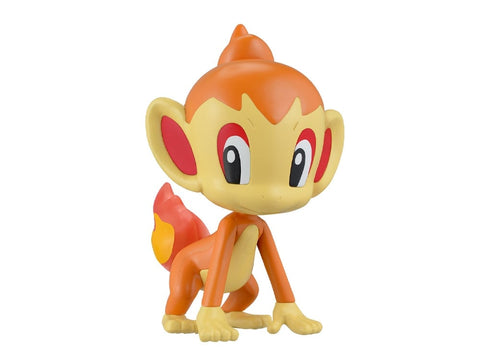
Pokemon Quick!! 29 Chimchar Model Kit
Bandai Spirits
Releases November 2026
 Vinyl Figures
Pokemon Wartortle Funko Pop! Vinyl Figure #1212
Funko
 Vinyl Figures
Pokemon 2026 Edition Funko Bitty Pop! Countdown Calendar
Funko
 Trading Cards
Pokémon TCG: Pitch Black Booster Bundle
The Pokémon Company International
Explore Pokémon collecting history, character-led displays, cards and building sets, with practical advice and related catalog items.
A collecting world that began with games
Pokémon Red and Green debuted in Japan in 1996. The company's timeline dates the North American games and animated series to 1998, followed by the Trading Card Game's North American and European arrival in 1999.
A game, television episode and traded card can create different personal connections to the same Pokémon.
Collection, training, battle and trading
The official Pokémon overview identifies collection, training, battle and trading as the franchise's continuing foundations. Those ideas connect games with the objects fans collect. Evolution gives one character family several recognizable forms; different regions provide another way to organize a selection; and trading makes comparison and clear identification especially important. The Trading Card Game first appeared in Japan in 1996, the same year as the original games, while television animation followed in Japan in 1997.
Evolution makes related forms a natural collecting unit, while regions and first-partner groups supply other boundaries. These connections come from the fictional world itself and can organize a mixed collection of cards, figures and builds.
The official illustration-contest interview with Creatures' Satoru Nagaya and Haru Saito explains why one species can support many cards. Their aim is not just to repeat a recognizable design: different expressions and situations should suggest new encounters with that Pokémon. They distinguish the underlying art direction from an illustrator's individual style, preserving consistency without making all pictures look alike.
Saito also points out a practical constraint: a printed card cannot be enlarged like an image on a digital drawing screen. Composition has to communicate at the size held in a player's hand. That provides a concrete reason to look at the relationship between creature and background. A crowded image and a clear account of what the Pokémon is doing are not necessarily the same achievement.
Success as an expanding shared hobby
The company records the first Pokémon TCG World Championships in 2004 and the simultaneous worldwide launch of Pokémon X and Y in 2013.
Organized competition and illustration-led collecting can coexist. A card chosen for its picture need not be selected for its usefulness in a tournament deck.
New interpretations of familiar Pokémon
Recent product development demonstrates how Pokémon revisits recognizable ideas through different formats. The Pokémon Company announced the return of Mega Evolution Pokémon to its Trading Card Game in the 2025 Mega Evolution expansion. That is a specific development within the card game, not a statement that every older Mega Evolution card is equivalent to a newer release. For collectors, the name of the expansion and the identity of the individual card remain essential.
LEGO's July 2026 announcement added subjects including Munchlax, Arcanine and Rayquaza, an Iconic Trainer Moments Poké Ball and an Up-Scaled Red Minifigure. It separately described interactive SMART Play products. Character models, remembered game moments and interactive construction therefore became different branches of the same range.
The creature and the printing
Expansion, collector number, language and treatment distinguish Pokémon cards that share a creature. A character family and a numbered expansion create different collecting boundaries.
Random-pack artwork does not promise the featured Pokémon inside. Fixed promotional contents and randomized cards need separate checklists.
Akira Egawa's account of her Milotic illustration for Sword & Shield—Darkness Ablaze shows what happens before a finished card exists. She researches Pokédex information about habitat, food and behavior, studies related real creatures and reviews earlier card compositions. Rough sketches test the face direction and arrangement before the detailed draft goes to Creatures and The Pokémon Company.
The review can alter small features of the Pokémon's shape and lighten colors that would become too dark in print. Egawa describes working digitally while balancing a believable background with a stylized subject. This makes an artist-led collection more than a preference for signatures: repeated cards can reveal decisions about environment, light and motion. The Milotic example explains a creative process; it does not imply that this particular card is offered in the local catalog.
Pikachu and Blastoise across formats
The catalog includes LEGO and Funko subjects such as Pikachu and Blastoise. Their shared character identities connect them, but construction and stylized vinyl display offer different experiences. A brick-built scene reveals how the form is assembled; a finished figure concentrates attention on pose and expression.
A character-led shelf can make those differences its subject. Rather than replacing one version with another, it can show how the familiar shape survives changes of material and proportion.
FAQs
Should I collect one Pokémon or complete a whole set?
Either can work. Choose a boundary you enjoy and can maintain. A character collection follows favorite interpretations; a set collection needs a precise checklist and a definition of completeness.
Are Pokémon products from different brands equivalent?
No. Compare the manufacturer, format, edition, size and contents. A shared character connects the theme but does not make a card, vinyl figure and building set interchangeable.
Sources
Pre-orders
Pre-orders are open
Reserve upcoming releases before they land. Full refund any time before it ships.