
Collection
Looney Tunes Collectibles & collecting guide
Pre-order: Looney Tunes
All pre-orders →

 Plush
Looney Tunes Big Chungus 9-Inch Plush
Youtooz
 Plush
Looney Tunes Tweety Bird Youtooz 9 Inch Plush
Youtooz
 Silver Collectible Foil
Agoro Looney Tunes ACME TNT Plunger 5g Silver Collectible Foil
Agoro
Explore Looney Tunes’ short-animation heritage, character pairings and comic visual language across plush, sculptural motifs and illustrated collectibles.
Short cartoons provide a different collecting rhythm
Looney Tunes grew from Warner Bros. short animation in the 1930s, as the franchise introduction on Youtooz’s licensed Tweety page summarizes. That short-form heritage offers a useful collecting perspective: an expression, prop or encounter can carry the memory of a complete comic situation. A collection need not follow one continuous adventure to feel coherent, because the characters’ personalities and recurring visual language provide their own connections.
Start with the kind of humor you want the objects to suggest. A character portrait emphasizes personality, while a paired image can imply pursuit or rivalry. A familiar prop may recall the setup of a gag without showing the outcome. These are different collecting ideas, and choosing among them can make a small display more distinctive than an attempt to represent every recognizable face associated with the franchise.
Duck Amuck shows how animation can question itself
The Library of Congress identifies Duck Amuck as a 1953 Chuck Jones short added to the National Film Registry in 1999. Its published essay discusses Daffy’s unstable surroundings and his confrontation with the unseen animator, turning the process of animation into part of the joke. That is a specific cultural-recognition milestone, not a claim that every Looney Tunes product or character has received the same honor.
For a collector, the example encourages attention to the way an object stages its joke. Is the character reacting to something, confidently performing or apparently caught in an absurd situation? A fixed collectible cannot reproduce the timing of an animated short, but its expression and arrangement can suggest a moment before or after the action. Think about what the viewer is invited to imagine rather than expecting one figure to summarize the entire cartoon.
Tweety becomes a study in proportion
Youtooz’s Tweety Bird Plush is described with a bright yellow head, large blue eyes, orange feet and three feathers at the top. The official page gives an April 1, 2025 release date and a nine-inch height. Those details show how a familiar animated design is translated into a soft, seated form. The corresponding local title is Tweety Bird Plush (9in).
A character-focused display can concentrate on those proportions. Give the head and feet enough visibility that the outline remains recognizable, and avoid placing a larger object directly in front of the body. If you compare Tweety across formats, consider which features each interpretation emphasizes rather than asking only which is most detailed. A plush and a flat illustrated collectible can communicate the same personality through very different material and compositional choices.
Two characters can imply an entire comic relationship
Mystery Collective lists Looney Tunes™ - Wile E. Coyote & Road Runner and Looney Tunes™ Sylvester & Tweety Silver Coin from Agoro. The paired names make relationships central to the product subjects. They do not, by themselves, identify a particular short, an exact frame or every material specification, so inspect the official release description before assigning more precise context.
For a pairing-focused collection, compare how the image divides attention between the characters. Does one appear to act while the other reacts? Is the relationship expressed through distance, direction or contrasting posture? Those questions can make a small illustrated object as interesting as a larger figure. Keep the pair visible as a whole rather than obscuring one subject behind another item. The collecting idea is the interaction, not simply the presence of two recognizable names.
A comic object can stand in for an unseen scene
Looney Tunes™ - Acme TNT Plunger is another Agoro entry in the catalog. Its title foregrounds an object rather than a character, giving a different route into the theme. Treat it as a named collectible subject, not a functional device, and use the manufacturer’s own specifications for its physical presentation. A familiar-looking prop does not establish a unique episode reference without further evidence.
A prop-centered arrangement can be especially economical. One object may suggest a setup, an expectation and a likely reversal, allowing the viewer to supply the imagined action. Place it where its outline is easy to read and resist surrounding it with so many characters that the central idea becomes unclear. It can also provide a visual pause between character portraits. That kind of variation makes the collection feel curated rather than like a uniform list of faces.
Keep crossover subjects and mystery formats identifiable
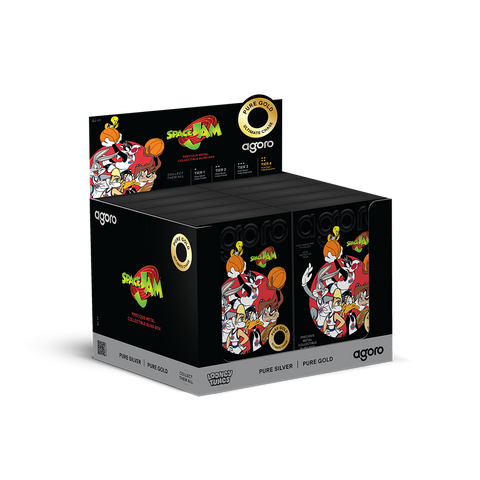
The local catalog includes Looney Tunes - Space Jam Blind Box and Trading Coins – Looney Tunes from Agoro. The Space Jam wording identifies a more specific subject within the broader theme, while blind-box wording describes a selection format. Neither title guarantees a particular character or a complete group, and a broad Trading Coins label is not a substitute for an exact checklist.
If you want a crossover-focused collection, keep it distinct from a survey of classic short-animation imagery. If you enjoy mystery selection, separate that experience from a plan requiring specific named subjects. Relevant guides and updates can help identify editions or source references, but each claim should remain attached to the correct release. Catalog visibility provides a research route, not stock confirmation. A thoughtful Looney Tunes collection preserves the clarity of the joke, whether it is carried by a character, a relationship or a single improbable object.
FAQs
Must a Looney Tunes collection follow one continuous storyline?
No. The franchise’s short-animation heritage supports collections organized around personalities, comic pairings or recurring visual ideas. Choose a clear connection rather than forcing unrelated objects into a single narrative sequence.
Does a paired character collectible identify one exact cartoon?
Not necessarily. The names establish the subjects, but a specific short or screen moment needs additional official evidence. A pairing can still express a recognizable comic relationship without being labeled as a recreation of one frame.
Sources
Pre-orders
Pre-orders are open
Reserve upcoming releases before they land. Full refund any time before it ships.