
Collection
Kool-Aid Man Collectibles & collecting guide
 Trading Cards
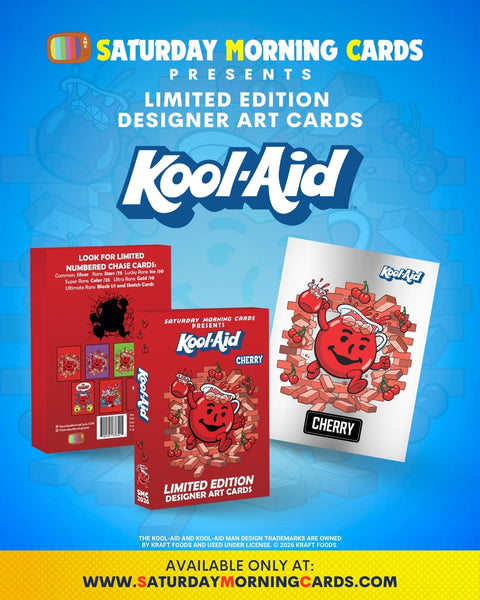
Saturday Morning Cards Kool-Aid Man Single-Card Box
Saturday Morning Cards
 Trading Cards
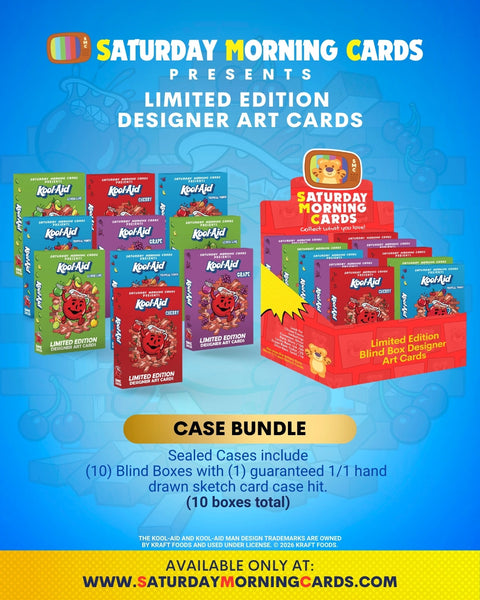
Saturday Morning Cards Kool-Aid Man Sealed Case (10 Single-Card Boxes)
Saturday Morning Cards
 Trading Cards
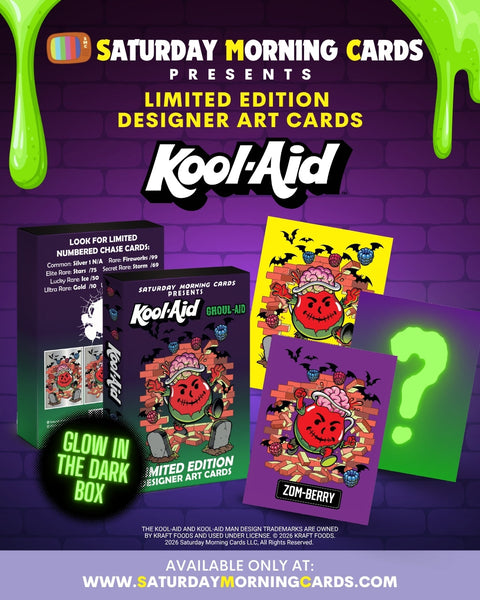
Saturday Morning Cards Ghoul-Aid Man Single-Card Box
Saturday Morning Cards
 Trading Cards
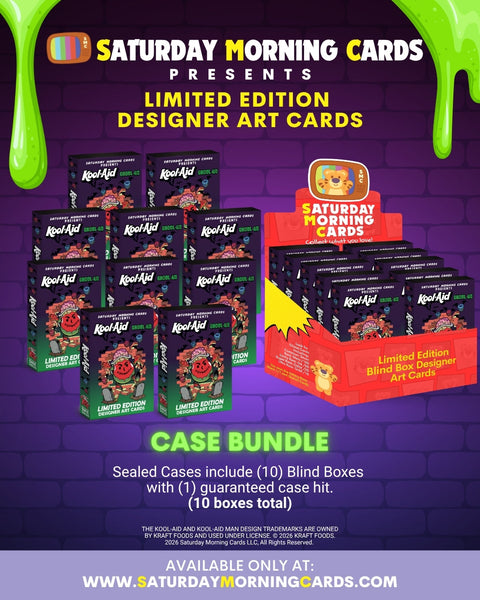
Saturday Morning Cards Ghoul-Aid Man Sealed Case (10 Single-Card Boxes)
Saturday Morning Cards
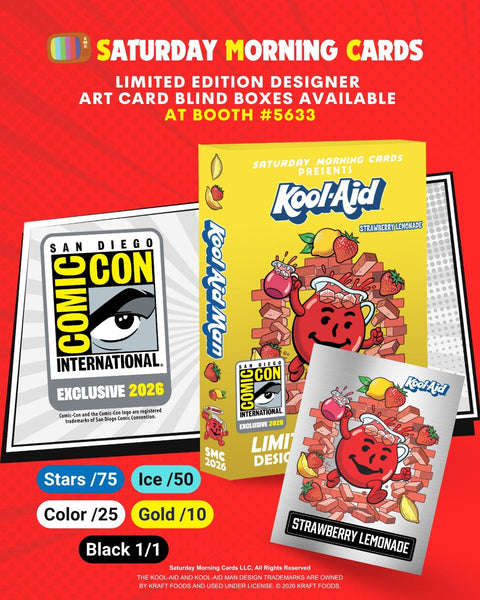 Trading Cards
2026 Saturday Morning Cards SDCC Exclusive Kool-Aid Man Blind Box
Saturday Morning Cards
 Pre-order
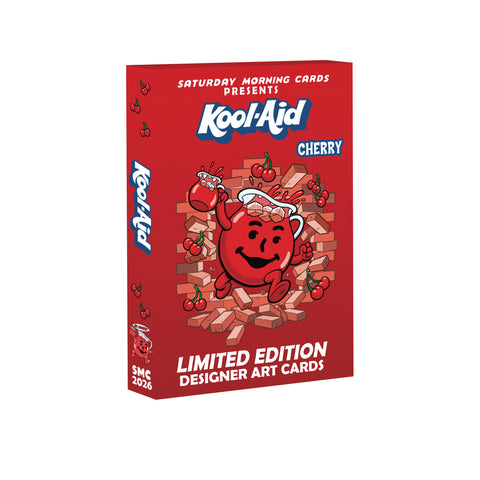
Saturday Morning Cards Kool-Aid Man Cherry Limited Edition Box
Saturday Morning Cards
 Pre-order
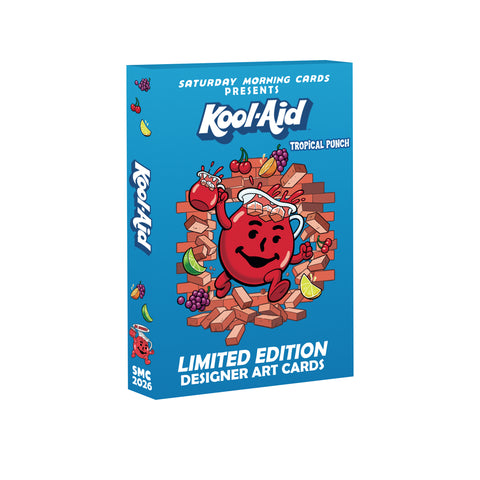
Saturday Morning Cards Kool-Aid Man Tropical Punch Limited Edition Box
Saturday Morning Cards
 Pre-order
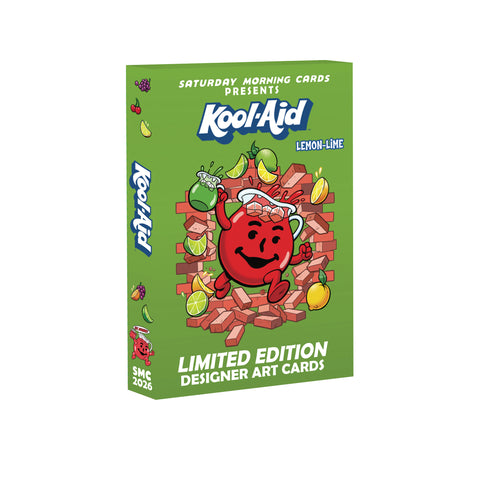
Saturday Morning Cards Kool-Aid Man Lemon Limited Edition Box
Saturday Morning Cards
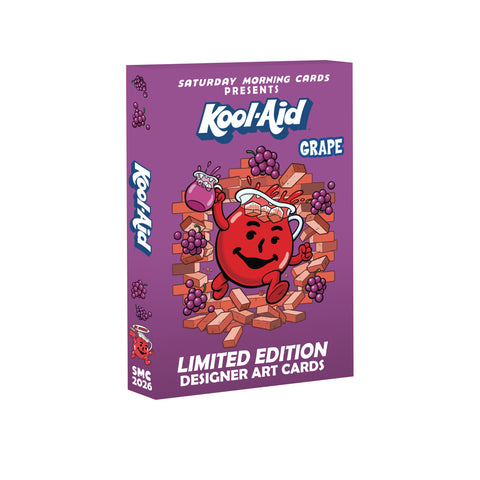 Pre-order
Saturday Morning Cards Kool-Aid Man Grape Limited Edition Box
Saturday Morning Cards
Explore Kool-Aid Man’s advertising history and Saturday Morning Cards single-box and ten-box sealed-case formats.
The drink’s history precedes the familiar mascot
Kool-Aid Man belongs to advertising history as well as collecting culture. The character represents a drink brand whose origins go back to Edwin Perkins. Hastings Museum dates the introduction of Kool-Ade to 1927 and records the change to the Kool-Aid spelling in 1934. It also documents General Foods' acquisition of Perkins Products Company in 1953. These are milestones in the product's history, not release dates for the modern cards discussed here.
The catalog's exact Kool-Aid Man theme contains two Saturday Morning Cards formats: Kool-Aid Man Single-Card Box and Kool-Aid Man Sealed Case – 10 Single-Card Boxes. They focus on the mascot as a collectible image rather than the drink itself. That makes this a useful theme for someone interested in package design, advertising characters or familiar childhood imagery. A collection can follow the mascot's appearance without becoming a collection of every beverage product or every item bearing the broader Kool-Aid name.
The pitcher became a personality
Kraft's 2015 account dates the mascot's first advertising appearance to 1954. Hastings Museum's chronology instead places the smiling pitcher in 1957. Those sources do not give a single, consistent debut date, so retain the attribution when discussing it. Both place the character after the drink's 1927 introduction.
The collecting attraction is the conversion of an everyday pitcher shape into an expressive character. A card can emphasize the face, the container silhouette or a flavor-associated color while remaining recognizable. Those are useful things to look for in the actual artwork, rather than reasons to assume every printed color is a scarce parallel. When a product uses a variant name, check what the publisher says the name means. Visual differences, edition numbering and package configuration are separate facts, even when they appear together in the same promotional image.
A documented shift from costume to CGI
In April 2013, the brand announced a campaign that replaced the previous costumed presentation with a CGI-generated Kool-Aid Man. The announcement described a redesigned personality and voice, alongside television, print, online and mobile material. It also tied the campaign to a liquid drink-mix launch. This is a concrete example of the character's direction changing with advertising technology while the central pitcher identity remained in place.
For collectors, that milestone suggests a way to organize imagery by treatment rather than by presumed value. A retro-looking illustration and a digitally rendered mascot may draw on different stages of the character's public life. The card's own artwork is the evidence for how it is presented; the 2013 campaign is historical context, not proof that every modern card uses those specific assets. If you enjoy design history, keep a brief note about the features that attracted you, such as expression, shape or composition, alongside the item's exact release information.
A single-card box is a randomized display product
Each box holds one random art card in a printed acrylic case.
Keep advertising nostalgia separate from product assumptions
A mascot collection is often personal: the appeal may come from a remembered advertisement, a familiar color palette or the humor of an ordinary object becoming a character. Use that connection to choose the artwork you want to live with. You do not need every variation to represent a meaningful part of that history.
For recordkeeping, distinguish the drink’s introduction from the mascot’s advertising debut and the date of the collectible. Record any numbering exactly as printed, without treating a color choice as proof of rarity.
FAQs
Did the drink and mascot debut together?
No. The drink dates to 1927. Kraft dates the mascot's advertising debut to 1954, while Hastings Museum places the smiling pitcher in 1957.
Does the 2013 campaign identify the artwork on every card?
No. It documents a CGI advertising redesign, not a checklist of assets used in this release.
Sources
Pre-orders
Pre-orders are open
Reserve upcoming releases before they land. Full refund any time before it ships.