
The Collector’s Shelf
Gundam Assemble
Explore Gundam Assemble through mobile suit identities, alternate worlds, and miniature scene-building, with careful attention to named versions and catalog codes.
Pre-order: Gundam Assemble
All pre-orders →
 Trading Cards
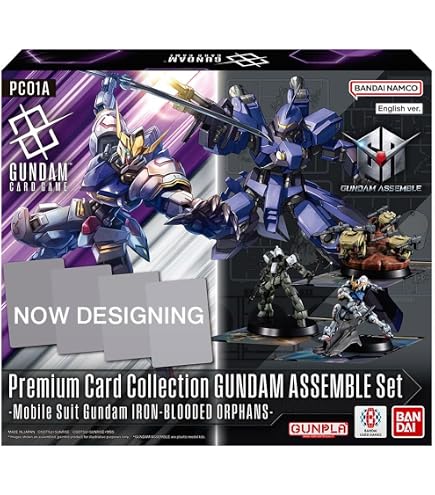
Premium Card Collection Gundam Assemble Set -Mobile Suit Gundam Iron-Blooded Orphans- [PC01A]
Bandai
$39.99Sold out Trading Cards
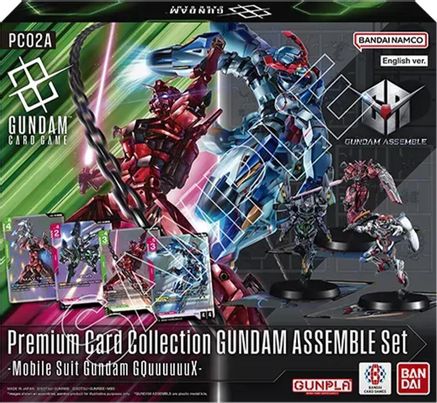
Premium Card Collection Gundam Assemble Set -Mobile Suit Gundam GQuuuuuuX- [PC02A]
Bandai
$39.99Sold out Cards
Bandai Gundam Card Game - Premium Card Collection Gundam Assemble - Iron-Blooded Orphans [PC01A]
Bandai
$116.99In stock Cards
Bandai Gundam Card Game - Premium Card Collection Gundam Assemble - Gquuuuuux [PC02A] (X2)
Bandai
$233.99In stock Pre-order
Bandai Gundam Assemble 01 Deluxe Set
Bandai
$159.99 Pre-order
Bandai Gundam Assemble 01 Paint Pack
Bandai
$80.99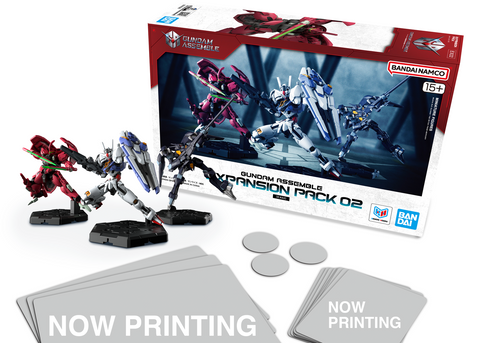 Pre-order
Bandai Gundam Assemble 02 Expansion Pack
Bandai
$63.99 Pre-order
Bandai Gundam Assemble 01 Starter Set
Bandai
$56.99Explore Gundam Assemble through mobile suit identities, alternate worlds, and miniature scene-building, with careful attention to named versions and catalog codes.
Many Gundam worlds on a small stage
Gundam Assemble offers a way to approach Gundam as a collection of visual worlds, not simply a list of game pieces. Bandai's launch announcement places the franchise's origins in 1979 and emphasizes that its stories span multiple settings and timelines. The miniature range brings designs from that broad history into a shared tabletop format. A meeting on the table should not automatically be interpreted as an encounter that happened in the original fiction.
That distinction creates an enjoyable collecting choice. You can build a scene that stays within one work, arrange contrasting designs from different series, or create an openly imagined crossover. Labeling the idea makes the display easier to understand. This theme page focuses on those artistic and narrative decisions, while the Gundam Assemble brand page explains the miniature product system. Gundam Card Game is a separate line, even where the wider hobby connects them.
Read the starter as a selection of identities
Bandai names six mobile suits in Starter Set 01: RX-78-2 Gundam, Char's Zaku II, Wing Gundam Zero EW, Gundam Epyon, Gundam Barbatos Lupus Rex, and Gundam Vidar. The selection is useful for comparing design identities across different parts of the franchise. It does not mean that the suits all belong to one chronological story, nor that every version of their names refers to the same appearance.
The catalog includes [ST01] Gundam Assemble Starter Set 01 and [DX01] Gundam Assemble Deluxe Set 01. Start with the exact code before researching a particular miniature. If your interest is an individual design, compare the manufacturer's named contents with the product images rather than assuming a deluxe label guarantees a preferred variant. Keeping the code beside a display note also helps distinguish this miniature from a larger model kit or an articulated figure of the same mobile suit.
Barbatos and the importance of changing forms
The official first-season Iron-Blooded Orphans profile describes Gundam Barbatos as an old Gundam Frame machine previously used as a power source by CGS, then brought back into action with Mikazuki as its pilot. Its accompanying form descriptions explain repairs and modifications using acquired components. This gives the design a history of adaptation rather than presenting it as a single unchanging object.
That reference concerns earlier Barbatos forms, not a specification sheet for the Lupus Rex miniature named in Assemble's starter. The distinction is worth preserving. When researching a miniature, identify its full version first and use earlier forms as background rather than copying their weapons or armor details onto it. For a collection, a short sequence of verified form names can tell a clearer story than a row labeled only Barbatos. It also prevents accidental mixing of artwork from different stages of the machine's fictional development.
A redesign is not always a different fictional machine
An official Bandai Namco reference for Endless Waltz gives a useful example of how Gundam naming can work: it explains that the OVA and movie appearance of Deathscythe Hell has a different visual design from the television version while representing the same suit. This is background about Gundam's approach to adaptation, not a claim that Deathscythe Hell is included in the local Assemble starter or any numbered expansion.
The lesson for an art-led collection is to preserve labels such as EW and other version markers. They can identify an adaptation or design treatment that matters to the image even when a casual description drops them. Before writing a scene caption, check the reference for that exact design. A collector can enjoy the contrast between versions without forcing every visual difference into an invented in-universe upgrade or asserting that every model name corresponds to a separate machine.
Use the base to explain the scene
A miniature display communicates through the relationship between the mobile suit and its surroundings. Decide whether your scene is a quiet presentation, an imagined confrontation, or a reference to a specific moment you can substantiate. For an imagined crossover, a simple label is enough to keep personal creativity distinct from official story material. You do not need an elaborate fictional explanation for enjoying two contrasting designs together.
Plan the base before adding scenic detail. Consider the viewing angle, the space around projecting parts, and whether the background helps the silhouette remain readable. A restrained base can make a complicated design easier to see. If you also intend to use the miniature in games, consult the current assembly and play requirements before changing the base or obstructing important features. A display decision should not accidentally make the piece difficult to handle or identify.
Follow names and codes as the range develops
The public selection contains numbered Expansion Packs EX01 through EX09, Paint Pack PA01, and Scenario Pack SC01 alongside the starter and deluxe listings. Those codes are useful research anchors, but numbers alone do not reveal the mobile suits, fictional setting, or story content inside a pack. Open the relevant product details before assigning any expansion to a timeline or character collection.
For future additions, keep a small reference record with the product code, full mobile suit designation, source work, and the basis for your scene. Relevant updates or guides can add context when they identify a newly confirmed design or explain a version difference. An announcement is still separate from local availability. The strongest collection narrative is one you can follow from an accurately named miniature to an official reference, with your own interpretation clearly marked along the way.
FAQs
Does an Assemble crossover prove that the mobile suits share one timeline?
No. Bandai explicitly presents Gundam as spanning multiple worlds and settings. Bringing designs together in a tabletop range does not merge their original stories. A crossover display is a creative collecting choice and should be labeled as such when it departs from the source works.
Why keep the full mobile suit version in a collection record?
Version markers can distinguish an adaptation, redesign, or fictional development stage. The official Endless Waltz reference demonstrates that a changed appearance need not mean a different machine. Keeping the complete name helps you find the right artwork and avoids transferring details from an unrelated version.
Sources
Pre-orders
Pre-orders are open
Reserve upcoming releases before they land. Full refund any time before it ships.