
The Collector’s Shelf
Goosebumps
Explore Goosebumps history, book-inspired Funko figures and Saturday Morning Cards, with practical guidance on editions and display.
Pre-order: Goosebumps
All pre-orders →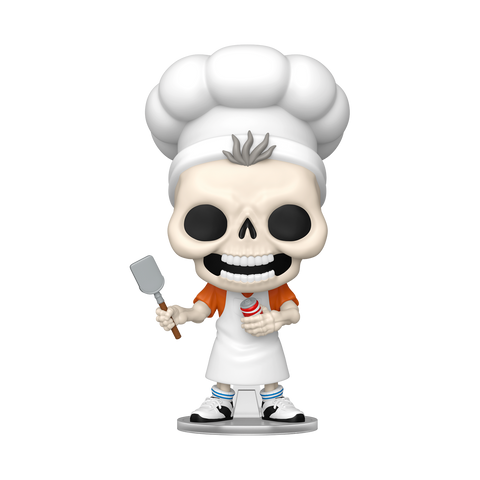
Explore Goosebumps history, book-inspired Funko figures and Saturday Morning Cards, with practical guidance on editions and display.
A bookshelf full of different nightmares
Goosebumps collecting is unusually well suited to choosing a favorite story rather than a single central hero. R. L. Stine's series began at Scholastic in July 1992 with Welcome to the Dead House, establishing a succession of spooky adventures for young readers. Scholastic identifies the original audience as ages eight to twelve. That publishing origin matters when choosing merchandise: a memorable book title can be the main connection, even when a figure does not reproduce a television actor or film scene.
The catalog reflects this book-led approach through Pop! Say Cheese and Die! and Pop! The Curse of the Mummy's Tomb, alongside 2026 SDCC Exclusive Goosebumps from Saturday Morning Cards. These are different kinds of objects united by the same imaginative world. Start by deciding whether your strongest memory is a particular paperback, the wider monster-filled atmosphere, or the pleasure of collecting illustrated cards. That decision gives a small collection a more personal direction than simply accumulating everything carrying the logo.
How the original series branched out
Scholastic's series guide identifies the original run as sixty-two books published between 1992 and 1997. It also distinguishes several later or parallel formats: Give Yourself Goosebumps puts readers in charge of choices, Tales to Give You Goosebumps collects short stories, and Goosebumps Graphix adapts stories into graphic novels. HorrorLand uses its sinister theme-park setting to connect a larger adventure. These are meaningful differences in reading experience, not interchangeable subtitles.
For a collection organized around books, record the exact title and the version of its artwork that you remember. Scholastic describes Classic Goosebumps as presenting original stories with new covers and bonus material. A familiar title therefore need not have the cover you first encountered. When pairing a figure with a paperback, matching the mood or character is often more satisfying than insisting that every object comes from one release year. Keep book editions and merchandise editions as separate fields in your collection notes.
From printed scares to a screen world
Sony's 2015 Goosebumps film took a different approach from simply retelling one book. Its premise makes Stine's monsters real and keeps them contained inside manuscripts until they escape. Zach, Hannah and Stine must return those creatures to the books. This is a useful distinction for collectors because a broad film-inspired display and a specific book-inspired display can share a name while telling different stories.
Scholastic's overview documents expansion into films, television, games and consumer products. That range is a concrete sign of the property's longevity; it does not establish the rarity or future price of a particular collectible. If your interest begins with the screen adaptations, check the product's stated line before assuming it uses a screen design. The two Funko figures highlighted here belong to Pop! Books. Their connection to named stories is more informative than the general fact that Goosebumps also has a film history.
Two book titles, two different silhouettes
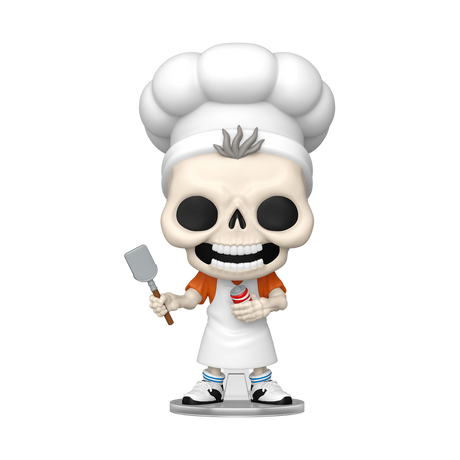
Funko identifies The Curse of the Mummy's Tomb as item 93485, box number 57, with an approximate height of 3.8 inches. Say Cheese and Die! is item 93486, box number 58, and approximately 5.3 inches tall. The latter depicts a skeleton at a grill. Those measurements make a practical difference: two products in the same Pop! Books collection will not necessarily occupy equal vertical space.
A paired display can emphasize the contrast between the mummy's compact shape and the taller grilling composition. Leave enough room to see each outline rather than hiding one behind the other. If you prefer boxed displays, use the item numbers to verify the releases instead of relying on a cropped photograph or abbreviated listing. Neither the title nor the consecutive box numbering means that a book is included. Treat each as its own vinyl collectible, then decide whether adding your own reading copy would strengthen the display.
Convention cards need their own edition checks
Saturday Morning Cards lists a product explicitly called 2026 SDCC Exclusive Goosebumps. The company describes its broader output as licensed designer art card blind boxes. However, the opened page for this particular exclusive does not provide a detailed checklist, pack configuration or guaranteed character selection. The title confirms the edition identity; it is not enough to support claims about which card a buyer will receive.
That uncertainty is important when comparing the card release with the two named figures. A figure listing tells you its subject directly, while an edition title for a blind-box product may leave the contents unresolved. Before choosing a card item, look for photographs of the actual packaging and any documented contents statement. Do not transfer details from a different Goosebumps release, another convention exclusive or an unrelated Saturday Morning Cards set. Keep the event name and year attached to the item in your notes so that similar-looking releases do not become confused.
Build a collection around the memory
A useful Goosebumps shelf can begin with one story and expand only when another object adds something different. The mummy figure could anchor a favorite-title display; the grilling skeleton creates a more theatrical little scene. Cards offer a flatter, artwork-led format that can sit nearby without competing for the same amount of shelf depth. There is no need to make every format part of the collection.
For gifts, separate the age range of the books from the manufacturer's guidance for the physical product. A series intended for young readers does not automatically make every collectible suitable for every child. Check the individual listing, packaging, condition and included components. Product pages are also the right place to confirm current status. A historical convention label, an old release announcement or a manufacturer's archived listing should never be treated as proof that an item can ship immediately.
FAQs
Are these Goosebumps Pops based on books or the film?
Funko places both named figures in Pop! Books. Use the specific story title and item number when identifying them, rather than assuming every Goosebumps collectible follows the movie designs.
Does the SDCC card title guarantee a particular character?
No. The reviewed publisher page confirms the 2026 SDCC edition but does not supply a complete contents guarantee. Check the individual product details before expecting a named card or special finish.
Sources
Pre-orders
Pre-orders are open
Reserve upcoming releases before they land. Full refund any time before it ships.