
Collection
Godzilla Collectibles & collecting guide
Pre-order: Godzilla
All pre-orders → Pre-order
Godzilla vs. Evangelion Test Type-01 Mechagodzilla Ver. Model Kit
Kotobukiya
 Pre-order
Godzilla Minus One Godzilla (2023) Odo Island Monster S.H.MonsterArts Action Figure
Tamashii Nations
 Pre-order
Godzilla Minus Zero Godzilla (2026) S.H.MonsterArts Action Figure
Tamashii Nations
Releases Estimated December 2026
 Pre-order
Godzilla Rampage: Burning Godzilla 6-Inch Glow-in-the-Dark Figure
Bandai
Releases Estimated December 2026
 Pre-order
S.H. Monsterarts Godzilla: Final Wars (2004 Movie) - Kaizer Ghidorah
Bandai Spirits
Releases Estimated May 2027
 Pre-order
Exquisite Basic Series Godzilla 2000: Millennium (1999 Movie) - 7" Godzilla Infrared (EX)
Hiya Toys
Releases Estimated May 2027
 Pre-order
Exquisite Basic Series Godzilla Vs. King Ghidorah - 9" Mecha King Ghidorah (Non-Scale)
Hiya Toys
Releases Estimated November 2026
 Pre-order
S7 DX Deluxe Toho Super Kaiju - W06 - Godzilla (Minus Zero)
Super7
Releases Estimated March 2027
 Pre-order
S7 ULTIMATES! Toho - Shin Godzilla (2016 Movie) - Shin Godzilla (Charging)
Super7
Releases Estimated November 2026
 Pre-order
Petitrama DX Godzilla Minus One (2023 Movie) - Godzilla -1.0 Repaint Ver.
MegaHouse
Releases Jun 30, 2027
 Pre-order
Legend's Faces Collection - Godzilla Minus Zero (2026 Movie) - Godzilla Heat Ray Emission Ver.
MegaHouse
Releases Estimated July 2027
 Pre-order
ReAction Toho Godzilla - W14 - King Ghidorah (Minus Zero)
Super7
Releases Estimated March 2027
 Pre-order
ReAction Toho Godzilla - W14 - Godzilla (Minus Zero)
Super7
Releases Estimated March 2027
 Pre-order
Legend's Faces Collection - Godzilla Minus Zero (2026 Movie) - Godzilla
MegaHouse
Releases Aug 31, 2027
 Pre-order
Godzilla Toho 30cm Series Godzilla Minus Zero Figure
X-Plus
Releases Feb 23, 2027
 Pre-order
Godzilla Minus Zero (2026) Deforeal Figure
X-Plus
Releases Feb 23, 2027
 Pre-order
Godzilla King Ghidorah (2026) S.H.MonsterArts Action Figure
Tamashii Nations
Releases Jul 31, 2027
 Pre-order
Godzilla Funko Bitty Pop! Mini-Figure 4-Pack
Funko
Releases Feb 28, 2027
 Pre-order
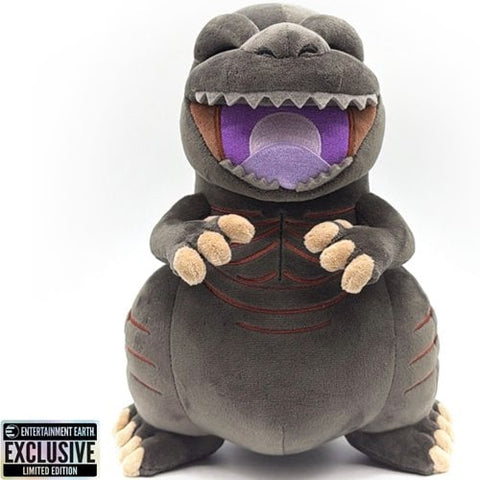
Shin Godzilla Glow-In-The-Dark 10th Anniversary 9-Inch Plush - Entertainment Earth Exclusive
Youtooz
Releases Estimated May 2027
 Pre-order
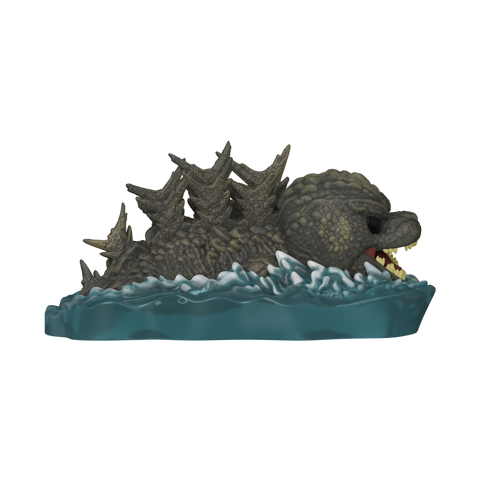
Godzilla Minus One Godzilla Swimming Deluxe Funko Pop! Vinyl Figure #2070
Funko
 Pre-order
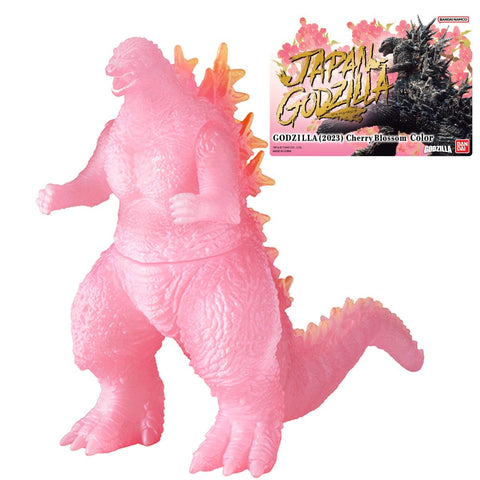
Godzilla Japan Series Cherry Blossom Vinyl Figure
Bandai
 Action Figures
Godzilla 2016 The Second Form, Third Form, and Giant Unidentified Creature S.H.MonsterArts Action Figure Set
Bandai Spirits
 7" Action Figure
Hiya Toys Exquisite Basic Series Godzilla Against Mechagodzilla 7" Godzilla (Heat Ray)
Hiya Toys
 7" Action Figure
Hiya Toys Exquisite Basic Series Godzilla 2000: Millennium (1999 Movie) 7" Godzilla (Heat Ray)
Hiya Toys
Explore Godzilla’s film history, Mothra, award milestones and stylized collectibles, with guidance on screen versions, finishes and display.
The original film gives the monster a historical foundation
Godzilla's official film timeline begins with the 1954 film directed by Ishiro Honda, with music by Akira Ifukube. Its description places the attack on Tokyo within a broader warning about humanity's relationship with nature and itself. This origin matters because the character's collecting appeal is not limited to spectacle. A figure can recall the mood of a particular film, the craft of its monster design or the larger ideas that made the story memorable.
The 1954 reference is therefore more than a label for an older sculpt. Its threatened city and warning about humanity give the monster a particular atmosphere, distinct from treating Godzilla simply as the largest figure in a battle scene.
Different eras are useful clues, not interchangeable labels
The official Monsterpedia separates Godzilla entries into distinct periods, including 1954–1975, 1984–1995 and 1999–2004, alongside later incarnations. The film timeline also distinguishes Toho classics, Hollywood productions and animation. These categories provide a practical starting point for research, but they should not replace the exact film or product reference. An era can contain several designs, and a collectible may deliberately combine influences rather than reproduce one screen appearance literally.
Head shape, dorsal plates, body proportions and tail provide visible points of comparison between designs. An era label narrows the research, but the exact film remains a stronger reference for a screen-based figure.
The filmmakers' own account of Minus One makes those design choices specific. In Maxon's February 2024 interview, Yamazaki and modeler Kousuke Taguchi described developing a creature with a vertical stance, substantial legs and a mountain-like silhouette. Yamazaki prepared a rough digital maquette, then Taguchi adjusted the balance and worked up the surface detail. This was a collaboration between a director shaping the overall impression and a modeler refining the form.
The eyes underwent several revisions. Taguchi began with a smaller, crocodile-like approach, but Yamazaki wanted a more recognizable traditional Godzilla eye; the resulting shape was closer to an almond. The account supplies concrete features to study in a Minus One-based object: lower-body mass, upright posture and the character of the face. Those choices are more informative than treating every detailed skin texture as equally faithful to the film.
The wider kaiju cast creates more than one collecting path
Mothra's official profile identifies a 1961 introduction and distinguishes larval and winged forms. The character's role is associated with protection of Earth and Infant Island, while the film timeline records Mothra vs. Godzilla in 1964. These details explain why a Godzilla-themed collection can include a creature with a very different outline, color arrangement and narrative identity without losing its connection to the franchise.
Mothra changes the visual rhythm of a kaiju display. Wings extend sideways where Godzilla's body and tail emphasize other directions, and the larval form represents another life stage rather than merely a smaller winged creature.
Godzilla Minus One brought a major visual-effects milestone
Godzilla Minus One received the 2024 Academy Award for Best Visual Effects. The official announcement names Takashi Yamazaki, Kiyoko Shibuya, Masaki Takahashi and Tatsuji Nojima among the recipients. This is a concrete creative achievement in the franchise's history, separate from any claim about the future value of merchandise. It also gives collectors a reason to look more closely at how a specific film's visual design is translated into an object.
As reviewed November 5, 2026, the official Godzilla Minus Zero page announced a North American theatrical release for November 6, with Yamazaki returning as director, writer and visual-effects lead. That was a dated film announcement, not evidence of a corresponding collectible release.
Stylized figures can capture a scene rather than a replica
Youtooz's Godzilla the Destroyer offers a compact example of scene-based interpretation. The official product page gives a height of 3.8 inches and a November 3, 2024 release. It depicts the monster standing above ruined buildings with flames around the base, while the packaging extends the urban-destruction setting. Its appeal comes from a deliberately condensed composition, not simply from miniaturizing a full-scale creature design without alteration.
The catalog also includes metallic Godzilla, pearlescent and glitter Mothra finishes and Gold Mothra Chomp by Tom Whalen. These place color, surface and graphic design beside the scene-based Youtooz approach. They need not be ranked as though all were attempting the same kind of screen replica.
Silhouette, scene and surface
A comparison display can make the differences explicit: one film-specific Godzilla, a compact city-destruction scene and a stylized Mothra treatment. The unifying subject is the kaiju world, while each object emphasizes a different part of it.
Tails, wings and architectural bases make footprint as important as height. Leaving visible space around those forms helps retain the feature that distinguishes each design.
A figure then needs its own production process. In The Articulation Series' July 2024 interview, Godzilla product-planning lead Osako described proposing a monster, passing it to research and development for sculpting and joints, and reviewing factory samples. The role also extended to photography and packaging. This firsthand account concerns S.H.MonsterArts, a broader manufacturer example rather than an assertion that the range is stocked here.
In the same interview, translator and brand manager Shaun Leitmeyer noted the hand-sculpting work involved in classic monsters; Osako described modern references as concept art, 3D data or a mixture. That difference helps explain why a toy is not simply a miniature movie asset. Its source material must become a physical object with working joints and manufacturable parts. The resulting pose, balance and silhouette reflect both the creature design and the figure team's decisions.
FAQs
Is Mothra part of a Godzilla-themed collection?
Yes. The official franchise timeline and Monsterpedia include Mothra, with both larval and winged forms. Check which form and interpretation a particular collectible represents.
Does a Godzilla figure always reproduce one film accurately?
No. Some releases are stylized interpretations or use alternative finishes. Look for the exact stated reference instead of assuming that the character name guarantees screen accuracy.
Sources
- Godzilla official film timeline
- Godzilla official Monsterpedia
- Godzilla Monsterpedia: Mothra
- Godzilla Minus One wins the visual-effects Oscar
- Youtooz Godzilla the Destroyer
- Godzilla Minus Zero official film page
- Maxon interviews Yamazaki and modeler Kousuke Taguchi
- S.H.MonsterArts product-planning interview at SDCC 2024
Pre-orders
Pre-orders are open
Reserve upcoming releases before they land. Full refund any time before it ships.