
Collection
FNAF Collectibles & collecting guide
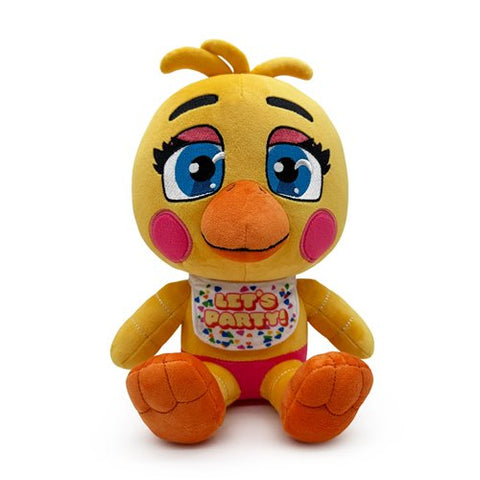 Plush
FNAF Toy Chica Youtooz 9 Inch Plush
Youtooz
 Plush
FNAF Shadow Freddy Youtooz 9 Inch Plush
Youtooz
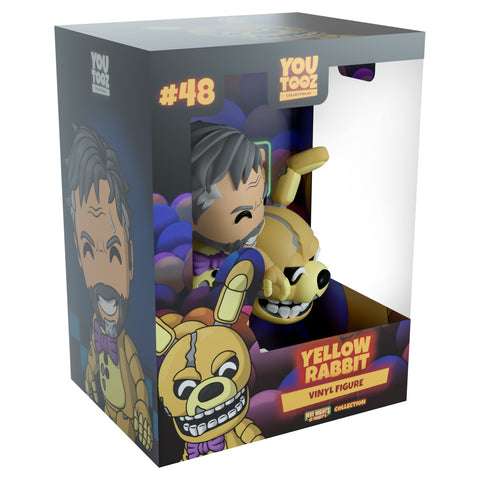 Pre-order
Youtooz FNAF Movie - Yellow Rabbit
Youtooz
Explore Five Nights at Freddy’s through its original security-office premise, Ruin’s changing setting and distinctive animatronic collectible interpretations.
A familiar entertainment setting becomes threatening
FNAF abbreviates Five Nights at Freddy’s, the horror series that began with Scott Cawthon’s night-shift game. Steam records its release there on August 18, 2014. The player watches Freddy Fazbear’s Pizza from a small office, with limited power for cameras, lights and security doors. The restaurant’s performers are supposed to entertain families, but the overnight employee encounters a different side of their behavior.
In an October 2014 interview with Geeks Under Grace, Cawthon explained that criticism of an earlier family-friendly beaver game helped inspire the idea. Reviewers had found its character disturbingly animatronic, so he deliberately pursued something frightening. He had been making games since receiving Klik & Play at thirteen, and described working alone while licensing music and sound from other companies. The horror premise grew out of an existing creator’s experience rather than a studio’s established character license.
Ruin takes the visitor through the abandoned attraction
Steel Wool Studios’ Security Breach – Ruin changes the viewpoint. Its story DLC follows Cassie into the abandoned Mega Pizzaplex in search of Gregory. Her equipment includes a Faz-Wrench, Roxy-Talky and rabbit-like mask. The setting is no longer a functioning family venue seen mainly through security monitors: it is a damaged space the character must enter and navigate.
That shift provides a useful frame for the catalog’s Ruined Roxy, M.X.E.S. and Mimic figures. Their appeal lies partly in what remains recognizable when the entertainment surface falls away. Damaged bodies, exposed mechanisms and digital imagery offer different answers to the same visual question: what is underneath the mascot? These figures do not need to share one material treatment to suggest the unsettling remains of a once welcoming attraction.
Ruined Roxy preserves recognition through damage
Youtooz’s Ruined Roxy stands 4.9 inches tall and reaches forward with a metallic hand tipped by green nails. The missing facial surface exposes empty eye sockets and teeth; a green tuft of hair and angular ears preserve elements of the character’s outline. Sections of the body reveal the endoskeleton. Youtooz dates the release to November 28, 2023.
The box shows Roxy entering a dim room through a deteriorating wall, while its interior carries the Security Breach logo and a blue-and-black checkered pattern. Figure and packaging emphasize different parts of the scene: the sculpt concentrates on the damaged performer, while the artwork supplies the surrounding ruin. The missing-looking face is intentional design, so condition assessment should compare the individual object with this specific release rather than with an undamaged Roxy.
M.X.E.S. and Mimic use contrasting kinds of exposure
The M.X.E.S. figure rises from a white, haze-like base, extending a large hand from a dark blue body marked with digital patterns. Long rabbit ears, white eyes and a broad smile give it a different presence from Roxy’s exposed mechanical parts. Youtooz lists a 4.2-inch height and November 28, 2023 release. The sculpt makes an apparently immaterial effect into a visible support for the character.
Mimic, also dated November 28, 2023, is a four-inch figure with an inquisitively raised finger and a forward-bending stance. Its bare metallic face, red wiring, ragged fabric and thick internal cables emphasize construction rather than a complete animal costume. Together, the two objects contrast a digitally patterned silhouette with a largely uncovered mechanism. Their product descriptions support that visual comparison without requiring a claim about hidden identities or the franchise’s disputed chronology.
Plush can retain the mechanical character of a design
The catalog also includes Shadow Freddy Plush (9in) and Toy Chica Plush (9in). Youtooz dates both to August 22, 2025. Shadow Freddy has a purple head, a small black top hat, pale pupils and visible colored wires. A microphone remains in his right hand. Minky fabric, felt details and PP-cotton filling translate that damaged performer into a soft seated object without removing its mechanical cues.
Toy Chica uses yellow fabric, pink cheeks and an orange beak, with a colorful ‘Let’s Party!’ bib. Segmented lines on the arms and legs preserve the suggestion of an assembled animatronic even in plush. Her nine-inch seated format contrasts with the compact vinyl figures, but it is not simply an enlargement of their sculpt. Fabric turns joints and hard surfaces into drawn or sewn information, changing how the same kind of character is represented.
Stillness is part of the appeal
The original game makes the player watch for performers that have left their expected places. That makes stillness an unstable condition: an apparently harmless object can become threatening between observations. A static collectible suits that tension particularly well. It captures the performer in the interval before possible movement, leaving the viewer to supply the unease. The threat comes from the relationship between a familiar face and its setting, not simply from the amount of visible mechanical damage.
A focused display can follow that idea through several physical treatments: Roxy’s fractured shell, Mimic’s exposed machinery, M.X.E.S.’s digital surface and the plush figures’ softened construction. The catalog’s Springtrap and Foxy Flocked offer further named directions, but a collection need not become a complete character checklist. Choosing one transformation, such as the shift from costume to mechanism, gives the objects a clear relationship while preserving their separate game and product identities.
FAQs
Does this FNAF page cover a separate franchise from Five Nights at Freddy’s?
No. FNAF is the abbreviation used for this catalog theme. Individual products still need their exact game and version identified; an abbreviated label does not make every interpretation part of the same scene.
Is a damaged-looking animatronic figure necessarily defective?
No. Some releases deliberately depict damaged characters, as the official Ruined Roxy description demonstrates. Compare the exact manufacturer imagery with the individual object before judging condition, and keep intentional sculpt details separate from actual wear.
Sources
Pre-orders
Pre-orders are open
Reserve upcoming releases before they land. Full refund any time before it ships.