
Collection
Dunny Collectibles & collecting guide
 Art figure
Kidrobot Plush Guts 8-Inch Dunny
Kidrobot
 Pre-order
KidRobot KRAK 8" KidRobot Dunny Figure
KidRobot
 Pre-order
KidRobot DUNNIBAL 8" Dunny Figure
KidRobot
 Pre-order
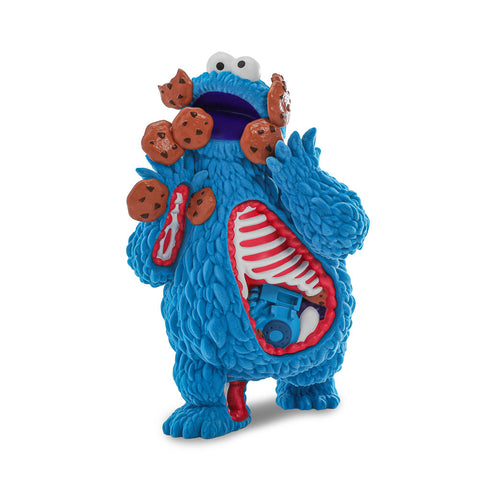
Kidrobot Junko Mizuno Kaiju Cookie Monster 8" Dunny
KidRobot
 Pre-order
Kidrobot KYUUBI 8" Dunny Figure
KidRobot
Discover Dunny’s artist-platform history, museum recognition and sculptural interpretations, with verified Kidrobot catalog examples.
A recognizable shape becomes a question for artists
Dunny is useful to understand as a platform rather than one character with a fixed story. Kidrobot's history credits Paul Budnitz and Tristan Eaton with its creation in 2004 and describes a rabbit-based form with tubular ears and a standardized body. Its name combines devil and bunny. The recurring form gives different artists a common starting point, making each transformation visible against something viewers can recognize.
Kidrobot’s retrospective identifies Plugin Hollywood among the earliest examples, distributed at Hong Kong Toycon in 2004. The first three-inch blind-box series brought together artists including Frank Kozik, Superdeux and Sket One; Eaton’s Voodoo Dunny carried the form into an eight-inch size. These are distinct steps in the platform’s early history: a promotional object, a multi-artist series and a larger sculptural presence. The shared silhouette made changes in artist, image and scale immediately comparable.
Tristan Eaton’s Still Life turns the platform inward
Tristan Eaton describes his Still Life Dunny as an autobiographical sculpture. The eight-inch vinyl work combines personal objects, including his father’s toy soldier, a Welsh dragon, a respirator and spray-paint caps. Kelly Barfield sculpted it. Rather than applying an image to the familiar outline, this collaboration builds the artist’s memories into its surface. It demonstrates how a recognizable platform can accommodate an unusually personal subject.
A museum record offers a precise historical anchor
MoMA's collection records Doma Dunny as a 2005 vinyl object credited to Paul Budnitz, Tristan Eaton and DOMA, Argentina, with Kidrobot identified as manufacturer. It belongs to the museum's Architecture and Design department. That specific record is a meaningful point in Dunny's design history. It does not imply that every Dunny edition is held by the museum or that another piece has the same institutional status.
The museum gives the object’s dimensions as eight by five by five-and-a-quarter inches and records it as a gift of the manufacturer. Its separate credits for platform designers and DOMA preserve the collaborative structure. That is an important distinction for artist toys: Kidrobot is the maker, but the named artist is part of the work’s identity. The museum record describes this particular Doma Dunny, not an endorsement or collection entry for every later edition.
Buck Wethers brings another character into the platform
The catalog includes Buck Wethers 8-Inch Dunny by Amanda Visell — Barnyard Blue. Kidrobot describes Buck as a stubborn goat and distinguishes Barnyard Blue from Country Peach. The character changes how the rabbit-derived form is read: the platform becomes the basis of an animal with its own temperament. The title’s artist and colorway are therefore useful information, not simply additional branding around a generic blue toy.
Kidrobot’s account of Visell’s background connects her work with stop-motion design and sculpture, including segments for The Simpsons and the film Elf. It also notes her paintings and Switcheroo, the design brand she formed with Michelle Valigura in 2007. Buck sits within that wider practice of building character through image and object. Beside a Dunny that concentrates on abstract surface decoration, an animal portrait makes a different demand: the body must convey personality as well as retain a relationship to the original platform.
The Clairvoyant turns the familiar ears into a frame
J*RYU explained in a January 2017 Kidrobot interview that the eight-inch Clairvoyant was conceived as a centerpiece for the smaller Arcane Divination tarot-themed series. Frank Kozik and the design team selected it from several proposals. Its flower-surrounded skull links accumulated wisdom with mortality; wrought-iron-like ears and arms frame the flowers, and an ouroboros on the back suggests cyclical introspection. These meanings come from the artist’s account rather than a collector’s guess at symbolism.
The production challenge was physical as well as conceptual. J*RYU wanted delicate petals, but vinyl production and their positioning limited how thin they could become. Prototype reviews led to adjustments with Kidrobot’s team. The catalog’s Antique Silver Edition carries the Clairvoyant name; the interview explains the underlying sculpt, not that later finish’s production quantity. Looking at the petal edges and framed silhouette reveals a design negotiated between an imagined shape and a manufacturable object.
A shared form connects very different artistic problems
Other catalog entries include Back in Black Skullhead by Huck Gee and separate Gold and Red Balloon Dunnys by Wendigo Toys. Alongside Buck Wethers and Clairvoyant, those titles suggest several ways to follow the platform: an artist’s work, a particular sculpt or alternative color treatments. The useful comparison is what changes in the object’s reading. A figure can acquire a character, gather symbolic details or make its outline the main event.
An artist-focused collection can place these approaches in conversation without making them stylistically uniform. Buck’s animal identity and Clairvoyant’s symbolic architecture need different kinds of attention. A close view may reveal the latter’s small details, while the former’s personality needs to read as a whole. The common Dunny shape gives viewers a point of reference, but the artists supply the differences that make repeated encounters worthwhile. A few well-chosen examples can show those differences more clearly than a crowded row in which the shared ears are all that remain visible.
FAQs
Does MoMA’s Dunny record apply to every edition?
No. The cited museum record identifies Doma Dunny, dated 2005, with specific credits and material. Do not extend that record to unrelated releases.
Should I identify a Dunny only by the Kidrobot name?
No. Where documented, retain the title, contributing artist, size and named edition as well. Those details distinguish individual interpretations of the shared platform.
Sources
Pre-orders
Pre-orders are open
Reserve upcoming releases before they land. Full refund any time before it ships.