
Collection
Dragon Ball Collectibles & collecting guide
Pre-order: Dragon Ball
All pre-orders → Pre-order
Dragon Ball Z Goku Genki-Dama Funko Pop! VHS Cover Figure with Case
Funko
Releases Estimated December 2026
 Pre-order
Dragon Ball Z Super Buu S.H.Figuarts Action Figure
Tamashii Nations
Releases Estimated December 2026
 Pre-order
Dragon Ball Z Son Gohan (Z-Fighters) S.H.Figuarts Action Figure
Tamashii Nations
 Pre-order
Dragon Ball DAIMA Panzy S.H.Figuarts Action Figure
Tamashii Nations
Releases Estimated December 2026
 Pre-order
Dragon Ball Super: Super Hero Piccolo vs Gamma 2 Dragon Stars Battle Pack
Bandai
 Pre-order
Pop! Dragon Ball Z Frieza Saga 4-Pack
Funko
Releases Estimated November 2026
 Pre-order
Ichibansho Dragon Ball Z - Trunks & Bulma (Dragon Ball Snap Collection 3)
Bandai Spirits
Releases Jun 30, 2027
 Pre-order
Ichibansho Dragon Ball - Yamcha & Puar (Dragon Ball Snap Collection 3)
Bandai Spirits
Releases Jun 30, 2027
 Pre-order
Ichibansho Dragon Ball - Bulma & Son Goku (Dragon Ball Snap Collection 3)
Bandai Spirits
Releases Jun 30, 2027
 Pre-order
Ichibansho Dragon Ball - Son Goku & Bulma (Dragon Ball Snap Collection 3)
Bandai Spirits
Releases Jun 30, 2027
 Pre-order
Ichibansho Dragon Ball - Lunch (Dragon Ball Snap Collection 3)
Bandai Spirits
Releases Jun 30, 2027
 Pre-order
S.H.Figuarts Dragon Ball Z - Chaozu (Z-Fighters)
Bandai Spirits
Releases Jul 31, 2027
 Pre-order
S.H.Figuarts Dragon Ball Z - Tenshinhan (Z-Fighters)
Bandai Spirits
Releases Jul 31, 2027
 Pre-order
Dragon Stars Dragon Ball Super - Frieza 4th Form Power Up Pack
Bandai
Releases Estimated January 2027
 Pre-order
Dragon Stars Dragon Ball Super - Super Saiyan Blue Goku Vs. Hit Battle Pack
Bandai
Releases Estimated January 2027
 Pre-order
Dragon Ball Z God of Destruction Beerus S.H.Figuarts Action Figure
Tamashii Nations
Releases Jun 30, 2027
 Pre-order
Dragon Ball Z Kid Gohan (Masenko) Funko Pop! Vinyl Figure (Specialty Series)
Funko
Releases Dec 31, 2026
 Pre-order
Dragon Ball Super Shin Funko Pop! Vinyl Figure #1283
Funko
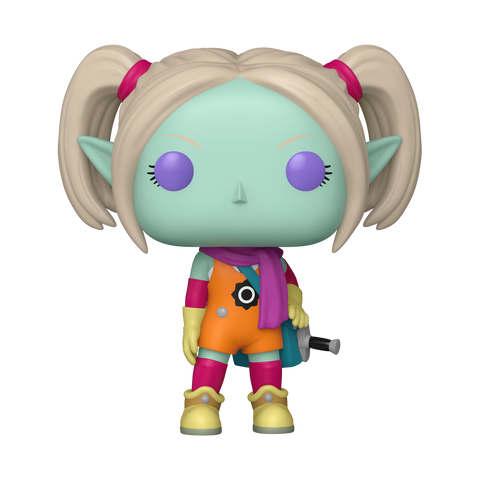 Pre-order
Dragon Ball Daima Panzy Funko Pop! Vinyl Figure #2307
Funko
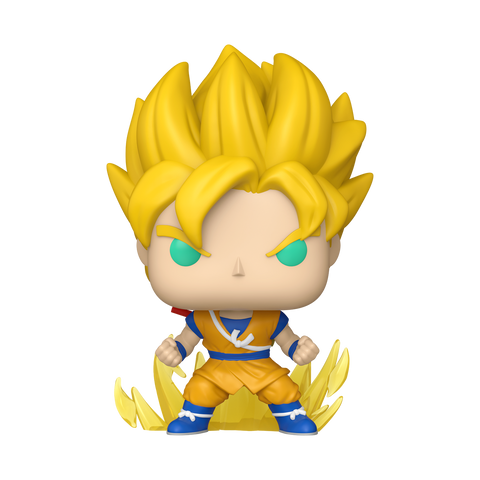 Pre-order
Dragon Ball Daima Super Saiyan Son Goku (Mini) Funko Pop! Vinyl Figure #2305
Funko
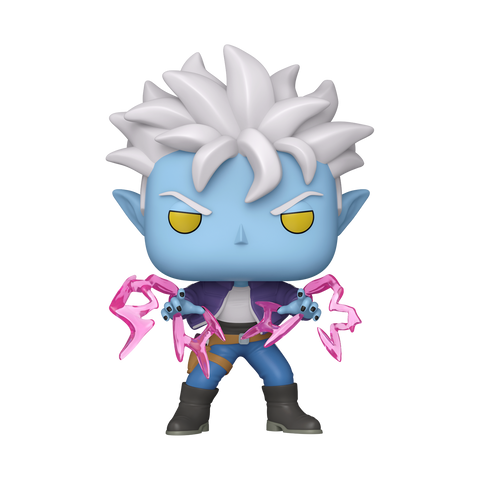 Pre-order
Dragon Ball Daima Glorio Funko Pop! Vinyl Figure #2306
Funko
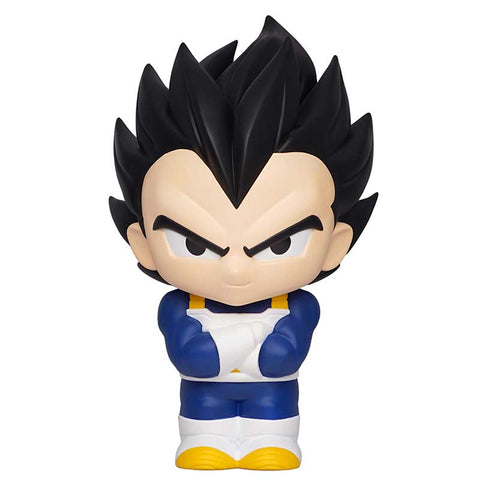 Coin Banks
Dragon Ball Z Vegeta PVC Figural Coin Bank
Monogram International
 Vinyl Figures
Dragon Ball Daima Supreme Kai (Mini) Funko Pop! Vinyl Figure #2310
Funko
 Trading Cards
Dragon Ball Z Playpaks: Saiyan Saga (4-Pack Blaster Box)
Cryptozoic Entertainment
Explore Dragon Ball’s manga origins, its distinction from Z naming, and Goku-centered collectibles spanning brick-built storytelling and compact character interpretations.
The manga provides the shared historical foundation
The official Dragon Ball site traces the series to its 1984 serialization in Japan’s Weekly Shonen Jump. VIZ identifies Akira Toriyama as its creator and dates the manga’s run from 1984 to 1995. These publishing facts establish a starting point before the many screen interpretations, games and physical collectibles that followed.
The first adventure is a meeting between contrasting kinds of knowledge. Bulma has built a radar to find the seven wish-granting Dragon Balls; young Goku has extraordinary strength, a monkey tail and a magic staff, but little experience of her world. VIZ’s introduction makes the search, rather than a tournament or planetary battle, the organizing idea. That is the context behind a child Goku and Shenron display: the dragon represents the destination of an adventure as well as an impressive creature.
Comedy and machinery were present from the beginning
The official site’s anniversary feature revisits Weekly Shonen Jump’s 1984 issue 51, where the series began. Its cover paired Goku with Bulma on a hoverbike. Toriyama explained that the vehicle came from his own motorbike, altered into a futuristic design. The feature also preserves a less obvious production detail: under deadline pressure, his wife drew much of the background in the opening pages. The earliest imagery was already a mixture of invented technology, landscape and comic character contrast.
Preview advertising emphasized comedy, including a picture of Shenron balancing on a Dragon Ball. That playful introduction is worth remembering beside later battle-focused collectibles. The original manga, published in America as Dragon Ball and Dragon Ball Z, accommodates both modes. A Dragon Ball label can therefore provide a broad family connection, while a specific name such as Frieza Saga identifies a much narrower point within it.
A brick-built scene highlights the original adventure
LEGO’s 1,764-piece Dragon Ball: Shenron & Goku is the first product in its announced partnership with Toei Animation. The manufacturer identifies the original episodic series as the reference: Shenron rises above the seven Dragon Balls while Kid Goku rides Kintoun. Designers studied animation frames and poses, then worked through structural solutions for the dragon’s looping body. The catalog includes this LEGO model alongside much smaller Funko portraits.
Goku’s minifigure can be detached and repositioned. Seven 2×2 bricks at the base stand for the Dragon Balls. These choices make the set both a constructed composition and a scene with a movable participant. Shenron supplies the large sweep of the silhouette; the smaller figure gives the eye a point of comparison. Building that relationship is a different pleasure from selecting a ready-made character portrait. The dragon’s curves must emerge from connections between pieces rather than a single continuous sculpted surface.
Anniversary art shows more than battle poses
The official fortieth-anniversary retrospective includes Goku’s family taking a snowy sleigh ride for installment two hundred. After installment four hundred, a smiling Goku appeared alongside his childhood and Super Saiyan selves. These images make room for family comedy and changing character forms within the manga’s own publishing history.
A display can follow that example without pretending its figures recreate one scene. Kid Goku beside a later transformation creates a comparison across time; a family-oriented arrangement asks a different question from a battle tableau.
A miniature portrait inside a portable case
The catalog lists Bitty Pop! & Accessories Goku & Keychain and its Super Saiyan Goku counterpart. Funko identifies the latter, item 97599, more specifically as Super Saiyan Goku First Appearance. Its vinyl figure measures approximately 0.9 inches and is fixed to a base that doubles as the removable bottom of its hard acrylic case. The keychain case accommodates standard Bitty Pop! cases, making the enclosing display part of the product rather than merely disposable packaging.
This arrangement places a miniature character portrait within another object. The case adds an outline around the figure, so reading the hair and costume becomes a close-up experience rather than the across-the-room impact of Shenron. The Super Saiyan qualifier also carries more information than a color variation would: it identifies the represented form. The two compact catalog titles make a focused comparison possible without treating the smaller figures as scale companions for the LEGO scene.
The Frieza Saga figure selects a later Goku
Pop! Son Goku (Frieza Saga), the other Funko entry here, is item 93326 and box number 2473. Funko describes a roughly 5.1-inch vinyl figure and explicitly connects it to the fight to save Namek from Frieza. That gives the parenthetical title a concrete purpose. It distinguishes a battle-era portrayal from the child riding Kintoun, even though both belong to the same character’s wider history.
Together these catalog examples offer three different scales of attention: an adventure scene, a tiny cased portrait and a larger arc-specific figure. A collection can follow Goku through those changes instead of arranging everything as one battle. The contrast is strongest when the original premise remains visible alongside the later transformation and conflict. Shenron’s sweeping body, the portable case and the named saga each frame the character differently, giving a small selection a clear story without requiring a comprehensive roster.
FAQs
Why do Dragon Ball and Dragon Ball Z appear in discussions of the same manga?
VIZ notes that Toriyama’s manga was published in the United States under both titles. That does not make every adaptation label or product version interchangeable.
Is the LEGO Shenron and Goku model specifically inspired by the original series?
Yes. LEGO identifies the original Dragon Ball episodic series as its inspiration and describes Kid Goku riding Kintoun beside the summoning of Shenron.
Sources
- Dragon Ball Official Site: About
- VIZ: Dragon Ball manga
- LEGO: Dragon Ball Shenron & Goku announcement
- Dragon Ball Official Site: Toriyama on the first serialized issue
- Dragon Ball Official Site: fortieth-anniversary illustration retrospective
- Funko: Super Saiyan Goku First Appearance Bitty Pop and keychain
- Funko: Son Goku, Frieza Saga
Pre-orders
Pre-orders are open
Reserve upcoming releases before they land. Full refund any time before it ships.