
The Collector’s Shelf
D’Orc
Explore Brett Bean’s D’Orc, its fantasy-comedy origins, debut comic artwork, and Keepsake trading-card interpretations.
Pre-order: D’Orc
All pre-orders →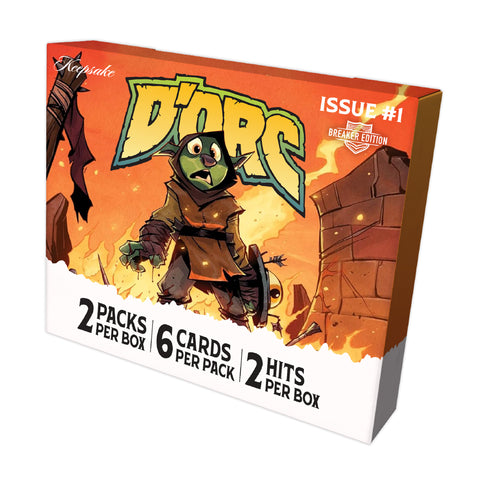
Explore Brett Bean’s D’Orc, its fantasy-comedy origins, debut comic artwork, and Keepsake trading-card interpretations.
An unlikely hero in an unfriendly fantasy world
D’Orc is the comic created by Brett Bean, published by Image Comics, and represented here through a card collection devoted to its first issue. It is not a general label for every orc-themed collectible. Bean’s background includes I Hate Fairyland, Rocket and Groot, and Zoo Patrol Squad, giving readers several useful reference points for an artist whose work spans expressive characters and comic storytelling. Those credits describe his career, not a shared universe connecting all those properties.
Bean’s work also includes puppet design for Jim Henson’s Creature Shop and card art for Marvel Snap. That background gives the move from comics to collectible images a practical context: his character work already crosses media. D’Orc remains his own series, however, rather than an extension of those commissioned projects. The Keepsake collection’s first-issue focus offers a concentrated look at the cast and imagery with which he introduced it.
A prophecy with room for awkwardness
Image’s launch announcement describes D’Orc as half dwarf and half orc, a lonely orphan caught in Sunderaine’s continuing conflict. An enchanted talking shield accompanies him, while a prophecy associates him with the destruction of the world. The premise places a need for companionship beside the much larger machinery of fantasy warfare. The series launched on February 4, 2026, with Jean-François Beaulieu coloring and Nate Piekos lettering alongside Bean.
Bean told Comics Bulletin that the idea grew from feeling caught between social groups while growing up. He could move among different personalities without feeling fully part of one crowd. The half-dwarf, half-orc protagonist turns that experience into fantasy. Bean describes him as loyal and usually good-natured, but frightened by his own anger. That contradiction gives the comedy an emotional center beneath the prophecy and warfare.
A documented early publishing response
On February 10, 2026, Image reported nearly 25,000 orders for the second printing of D’Orc #1. That is a specific publisher-reported milestone for a comic printing, not a sales total for trading cards or proof of future collectible demand. The same announcement previewed issue two and its further adventures involving the hero, his shield, and Ghost Chicken. It establishes that the debut was already being followed by an ongoing story rather than a standalone illustration campaign.
The launch also invited other artists to interpret the character. Image named Jorge Corona and Jason Howard among the first issue’s cover artists, alongside incentive covers by Ryan Ottley and Ryan Stegman and a blank sketch cover. These are specific publishing variants rather than interchangeable copies of Bean’s cover. For a reader interested in character design, the first issue already offers several viewpoints on the same new protagonist.
Comic images reinterpreted as cards
Keepsake describes a 250-card collection with a 100-card base set and inserts including Lineart, Comic Panel, Wanted Poster, The Prophecy and Pop Art. These vary the graphic presentation, not simply its color. Brett Bean’s on-card autographs are listed separately from Laser Signagraphs, while original sketch cards include work by Bean and additional artists. Credits distinguish those contributions.
The first-issue focus in the catalog
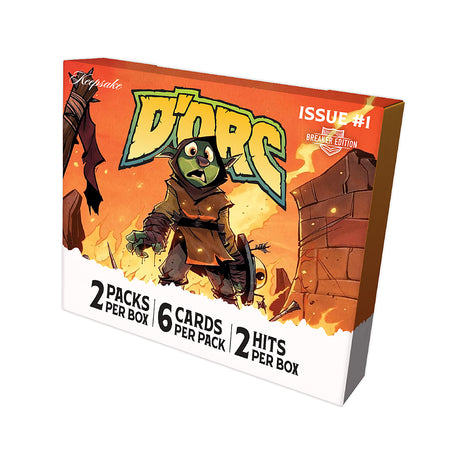
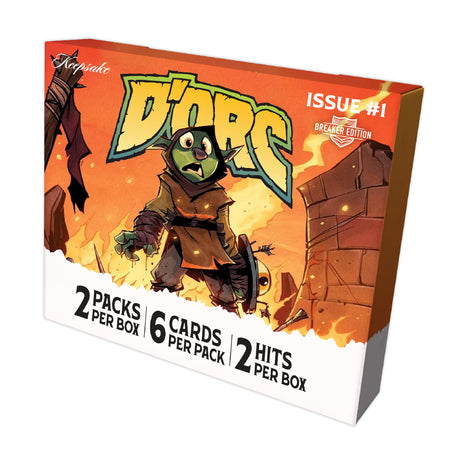
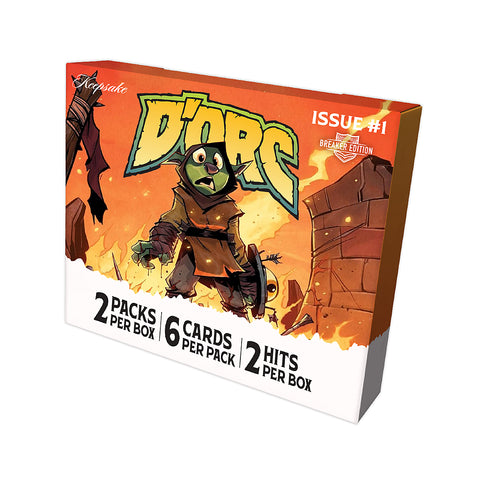
The catalog’s D’Orc Issue #1 Keepsake Premiere Breaker Edition Box and 10 Box Case represent different quantities of the same release. Keepsake specifies two six-card packs per box and ten boxes per case. The 250-card collection describes the overall checklist, not one box’s contents or a promise of every insert treatment.
The talking shield began as a different kind of weapon
Bean originally imagined an enchanted bow whose movement would spoil the hero’s aim. He abandoned that as too narrow a joke for an ongoing character. The shield instead puts an aggressively violent personality inside a defensive object. That mismatch creates a continuing source of conflict, rather than a single repeated punchline. In the same interview, Bean described aiming for humor generated within Sunderaine itself instead of depending on topical parody.
The distinction changes how an isolated card image reads. A shield is not merely equipment decorating the protagonist; it is another personality in the exchange. A pose that appears heroic can also contain frustration, disagreement or absurdity. The comic provides the timing and dialogue around those moments, while the cards allow a closer look at an expression or drawing. Keeping both formats in view makes the collection about Bean’s specific fantasy comedy rather than a generic assortment of orcs and weapons.
FAQs
Is D’Orc an older fantasy franchise?
The D’Orc series discussed here launched from Image Comics in February 2026. Its creator has earlier published work, but those career credits should not be mistaken for earlier D’Orc installments. The catalog’s Keepsake products specifically identify issue one.
Are the box and ten-box case different stories?
No. Their catalog names identify packaging formats for the same first-issue card release. Choose by your collecting plan and the current product details, rather than assuming the larger format adds a different storyline or guarantees a particular character card.
Sources
Pre-orders
Pre-orders are open
Reserve upcoming releases before they land. Full refund any time before it ships.