
The Collector’s Shelf
BattleTech
Explore BattleTech’s imagined societies, pilots and mercenary identities through story-led miniature collecting and grounded visual interpretation.
Pre-order: BattleTech
All pre-orders → Pre-order
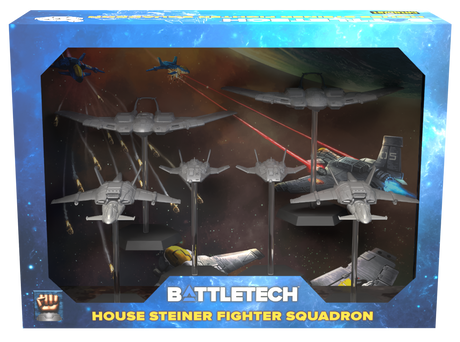
BattleTech: House Steiner Squadron AeroSpace ForcePack
Catalyst Game Labs
Releases Feb 3, 2027
 Pre-order
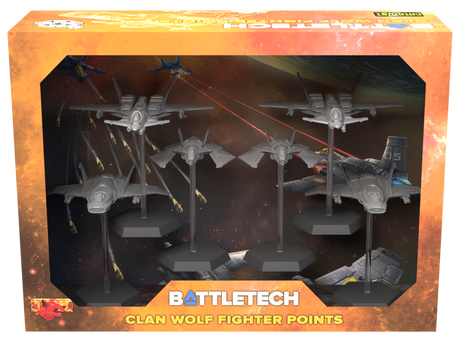
BattleTech: Clan Wolf Fighter Points AeroSpace ForcePack
Catalyst Game Labs
Releases Feb 3, 2027

BattleTech: Fire and Ice BattleMat 08 - Laze Base
Catalyst Game Labs
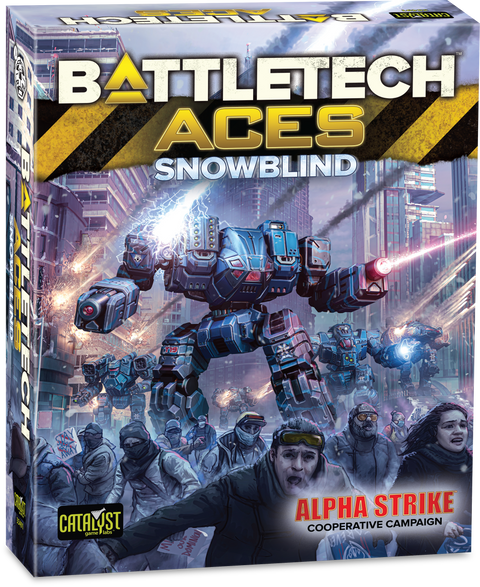
BattleTech: Aces - Snowblind
Catalyst Game Labs
Explore BattleTech’s imagined societies, pilots and mercenary identities through story-led miniature collecting and grounded visual interpretation.
The machine is only part of the setting
BattleTech's official universe overview places its BattleMechs among feudal star nations, the Great Houses, the Clans, the Periphery and independent mercenaries. That context changes how a miniature can be read. The same broad idea of an armored machine can represent institutional power, a frontier struggle or the livelihood of a small unit. A theme-focused collection asks who operates the machines and what their presence means, not only which chassis is represented.
The setting’s history repeatedly changes what a machine represents. During the Succession Wars, damaged industrial capacity and lost knowledge make advanced equipment a link to a vanished golden age. A later technological resurgence changes that balance again. Thus a scarred BattleMech can suggest more than a veteran pilot: in one era it may embody the difficulty of preserving inherited machinery, while another setting places it among newly developed competitors. The fictional date shapes the story even when the physical miniature is unchanged.
Different organizations imply different stories
The official glossary identifies the five Great Houses as Davion, Steiner, Marik, Liao and Kurita, each commanding a Successor State. It describes the Clans as descendants of the Star League Defense Force returning from exile with advanced technology and a warrior-caste society. Mercenaries are independently organized military units working for hire. These are distinct fictional institutions, and their differences can matter more to a narrative collection than a shared machine silhouette.
House Kurita provides a concrete example in the catalog’s Command Lance and Ranger Lance ForcePacks. The official faction profile places the Draconis Combine’s founding under Shiro Kurita in 2319 and its capital on Luthien. The ruling Coordinator, the Draconis Combine Mustered Soldiery and manufacturers such as Luthien Armor Works connect political authority, military organization and industrial design. The Sword of Light and the Otomo are distinct formations, not interchangeable names for every Kurita force.
Mercenaries give the setting a human and organizational scale
BattleTech's glossary defines a MechWarrior as the pilot commanding a BattleMech. That simple relationship provides a useful change of scale for collectors: the large machine can be understood through an individual rather than only as a weapon on a roster. A personal narrative might focus on a pilot's responsibility to a unit, their attachment to equipment or the consequences of an assignment.
Force Manual: Mercenaries, listed in the catalog, provides more substantial starting points than a generic faction label. Catalyst describes unit histories, combat commands, notable personnel, crests and paint schemes, alongside rules material. These different records answer different creative questions: a crest establishes public identity, a history explains how that identity formed, and personnel connect a force to individuals. A miniature group can draw from that organizational portrait without requiring every model to depict a famous named pilot.
Draconis Reach turns a border into a campaign subject
BattleTech Hot Spots: Draconis Reach moves the focus from a unit’s identity to the place where it operates. Catalyst identifies it as an ilClan-era campaign guide, including conflicts between the Draconis Combine and Federated Suns. Its hooks also include a Sea Fox merchant’s trial by combat and biomedical technology. Those examples broaden the setting beyond a single national war: commercial interests and research can also bring military forces into contact.
The distinction between this book and Force Manual: Mercenaries is useful for a story-led collection. One supplies situations and a contested region; the other describes organizations and their people. A named House Kurita ForcePack, meanwhile, supplies a physical group around which those questions can take shape. They are complementary kinds of material, not three versions of a miniature box. Their strongest connection is the relationship between who a force is and what it has been sent to do.
The Clan Invasion changes the meaning of military power
The official Clan Invasion overview describes the return of Kerensky’s descendants with OmniMechs, Elemental battle armor and superior equipment. The advance toward Terra was checked at Tukayyid by ComStar, producing a 15-year reprieve. This is a shift in the setting’s assumptions, not simply an expansion of its machine catalog: established powers encounter a rival society with different institutions and a technological advantage.
For a themed collection, that conflict creates contrasts between lineage and adaptation, elite equipment and the struggle to respond. It also explains why a machine’s appearance cannot by itself convey its whole role. A display of opposing forces can use a short era caption to establish the historical imbalance, then let insignia and unit selection distinguish the sides. Those details are more informative than treating every BattleMech as an isolated robot with no political or human context.
The ilClan era carries old ambitions into new conflicts
In the official ilClan overview, Clan Wolf’s capture of Terra under Alaric Ward leads to a claim to the ilClan title and a renewed Star League. The era begins in 3151. This brings a longstanding Clan ambition to a decisive moment without ending conflict across the setting. It is the historical framework for Draconis Reach, so that book belongs to a different moment from the initial Clan Invasion rather than serving as a neutral guide to every BattleTech period.
The catalog also includes MapPack: Glacier and MapPack: Volcanic. These are environmental rather than faction identities, offering another way to organize a scene without replacing its historical setting. A regional campaign, a mercenary company and a harsh landscape are three separate layers: location, people and conditions. Combining them deliberately can make a small group legible as a particular story. The miniature’s manufacturing date remains separate from all three; a newly produced model can represent an earlier fictional era when the selected unit and context support it.
FAQs
Is a miniature’s release date its date within BattleTech history?
No. Production history and fictional chronology are separate. Record the object’s identity alongside the era or scenario you intend it to represent.
Can I invent a mercenary unit for a personal collection?
Yes, as a creative project. Label your unit and its history as original, and distinguish those choices from documented setting facts or any current game requirements.
Sources
Pre-orders
Pre-orders are open
Reserve upcoming releases before they land. Full refund any time before it ships.