
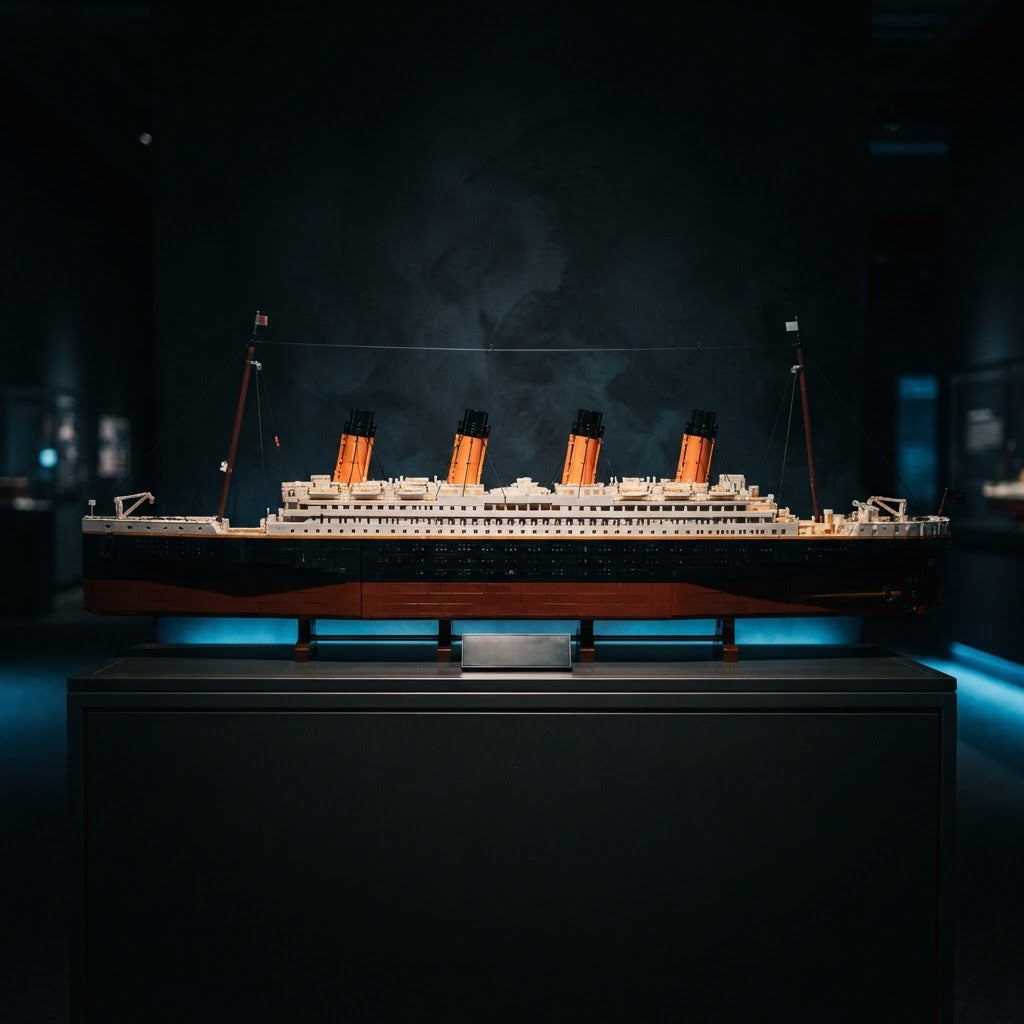
Images generated for fun only.
LEGO Collector's Guide 2026: Retiring Sets Worth Collecting Now
Understand which LEGO sets are appreciating fastest and why smart collectors are locking in retired pieces before the secondary market surges.
LEGO collecting has evolved beyond a childhood hobby—it's a legitimate collectible asset class. With certain sets appreciating 40-60% above retail within 12 months of retirement, savvy collectors are treating LEGO purchases as collection builders, not disposable toys. But which sets actually hold value, and how do you identify LEGO centerpieces before they spike? This guide breaks down the 2026 LEGO market and reveals the sets worth acquiring now.
Why LEGO Sets Appreciate: The Economics Behind Brick Scarcity
LEGO appreciation is driven by simple economics: limited production + lasting demand = scarcity. When a set retires, LEGO stops manufacturing it. Collectors who didn't grab it during retail availability must turn to the secondary market—eBay, BrickLink, specialty shops like Mystery Collective's LEGO collection—and prices climb. Factory-sealed sets appreciate fastest because they're rarer and more desirable than open or incomplete versions. A factory-sealed LEGO Titanic (10294) retailed at $679.99 in December 2022; today, sealed boxes command $900-$1,100+. That's a 30-60% return in under 3 years, outpacing many traditional pickups. UCS Star Wars sets, modular buildings, and large architecture models—sets with 4,000+ pieces and premium price points—show the strongest growing demand because they have smaller production runs and passionate collector bases.
The LEGO Titanic (10294): The Crown Jewel of 2026 Retirements
The LEGO Titanic is poised to be the most sought-after retired set of 2026. At over 9,000 pieces, $679.99 retail price, and a 1:200 scale recreation of history's most iconic ship, the Titanic checks every collecting box. It's already retiring mid-to-late 2026, and sealed boxes are trending upward on resale markets. Sealed LEGO Titanic units are now listed at $900-$1,100 on secondary markets—a 33-62% appreciation from retail. By the end of 2026, expect sealed boxes to stabilize around $1,200-$1,400. The key: buy factory-sealed units now. A loose or built Titanic has far less collector value because the box, instructions, and pristine condition are irreplaceable. Store your Titanic in a climate-controlled space away from sunlight and excess humidity. LEGO plastic doesn't degrade easily, but collectors demand near-mint boxes, and any yellowing or damage kills resale value.
Modular Buildings: The Steady Wealth Builder for LEGO Collectors
LEGO's modular building line is the gold standard for growing demand. Sets like the Detective's Office, Parisian Restaurant, and Boutique Hotel have appreciated 50-100%+ since retirement. Why? Collectors build ongoing modular "streets" by stacking these sets, so demand is perpetual. A retired modular that cost $160 retail now sells for $280-$350+ sealed. The beauty of modulars: they retire slowly, giving you time to acquire multiple sets before they become scarce. LEGO has confirmed modular releases through 2027, so this asset class will remain strong. For 2026, watch the upcoming modular releases closely—they'll be your future pickups 3-5 years out. Buy sealed, store flat in original packaging, and expect 50-100% returns over 5-7 years.
Star Wars UCS (Ultimate Collector Series): The Prestige Play
UCS Star Wars sets are the prestige tier of LEGO collecting. The UCS Millennium Falcon (75192) is worth $2,500-$4,000+ sealed. UCS Star Destroyer, AT-AT, and X-Wing sets command $800-$1,500 in the secondary market. These sets are expensive ($800+ retail), so production is limited, and once retired, they become true grails. For 2026, monitor LEGO's Star Wars release schedule for new UCS announcements—new UCS sets are rarer than modulars and attract hardcore collectors with deep pockets. Expect UCS retirements to appreciate 40-80% within 12 months of discontinuation. The barrier to entry is high, but if you're a serious collector, UCS pieces are collection anchors.
Architecture & Icons: Landmark Sets with Museum Value
LEGO Architecture and Icons sets (the Eiffel Tower, Big Ben, Colosseum) are display-grade collectibles. While they don't appreciate as fast as UCS Star Wars, they offer steady 30-50% returns because they appeal to both LEGO and architecture enthusiasts. The LEGO Eiffel Tower (10307) retailed at $369.99 and now sells for $500-$600+ sealed. The LEGO Titanic (10294) is the crown jewel—9,000 pieces, unprecedented size, and $679.99 price point make it a rare LEGO achievement. Icons sets rarely retire faster than 2-3 years, giving you time to acquire and collect. These are conversation-piece pickups that look great displayed while appreciating steadily.
Buying Strategy: How to Identify LEGO Collector Appeal
Not every set is worth buying as a long-term pursuit. Use these criteria: (1) Retail price point—sets over $200 tend to grow in demand more because fewer people can afford them, so scarcity is guaranteed. (2) Piece count—4,000+ pieces = prestige + limited production. (3) Theme pedigree—Star Wars, modular buildings, and classic IPs appreciate. Niche themes (some City or seasonal sets) may not. (4) Retirement timeline—the sooner a set retires, the faster secondary market demand rises. (5) Condition—buy factory-sealed only. No exceptions. An opened LEGO set loses 30-50% collector value immediately. For serious LEGO collecting, use Mystery Collective's retail and secondary market tracker to monitor set retirements and resale trends. Compare prices across BrickLink, eBay, and specialty retailers to catch underpriced sealed units before demand surges.
Storage & Long-Term Preservation
LEGO plastic is extremely durable, but mint-in-box (MIB) condition is everything for centerpieces. Store sealed boxes in a climate-controlled environment (65-72°F, 30-50% humidity). Avoid direct sunlight, basements, and attics—temperature and humidity fluctuations cause box yellowing and plastic brittleness. Use acid-free tissue paper if you must store boxes stacked. Pick up UV-protective display cases if you're keeping your LEGO as room décor while appreciating. Keep original receipts or documentation of your purchase—provenance and authenticity matter when selling high-end pieces.